
If you take bisphosphonates for osteoporosis or another bone condition, you may have been told that dental implants are risky or even impossible. The reality is more nuanced.
Many patients taking bisphosphonates for osteoporosis can still be considered for dental implants. Bisphosphonate therapy is not automatically a contraindication to implant treatment. However, the reason for taking the medication, its dose, frequency, duration, other medical conditions and the health of the jawbone and gums all influence the decision.
The situation is very different for patients receiving high-dose antiresorptive therapy as part of cancer treatment. In these patients, the risk of medication-related osteonecrosis of the jaw (MRONJ) is substantially more important, and elective dental implant surgery is generally avoided.
This article explains what current evidence says about bisphosphonates and dental implants, implant survival, MRONJ, drug holidays and the factors an implantologist should evaluate before treatment.
This information is educational and does not replace an individual assessment by your dentist, oral surgeon or prescribing physician. Never stop bisphosphonate treatment without discussing it with the clinician who prescribed it.
Can You Have Dental Implants While Taking Bisphosphonates?
Yes, in selected patients.
For people taking bisphosphonates in doses commonly used to treat osteoporosis, current evidence does not support automatically excluding them from dental implant treatment.
A 2025 International Osteonecrosis of the Jaw Taskforce consensus statement concluded that, in patients with osteoporosis receiving antiresorptive therapy, treatment does not routinely need to be discontinued before dental implant placement. The recommendation was graded as weak because the available evidence remains limited.
A separate 2025 systematic review and meta-analysis also found no clear evidence that antiresorptive treatment for osteoporosis increased dental implant failure. However, bisphosphonate exposure was associated with a small increase in the risk of MRONJ.
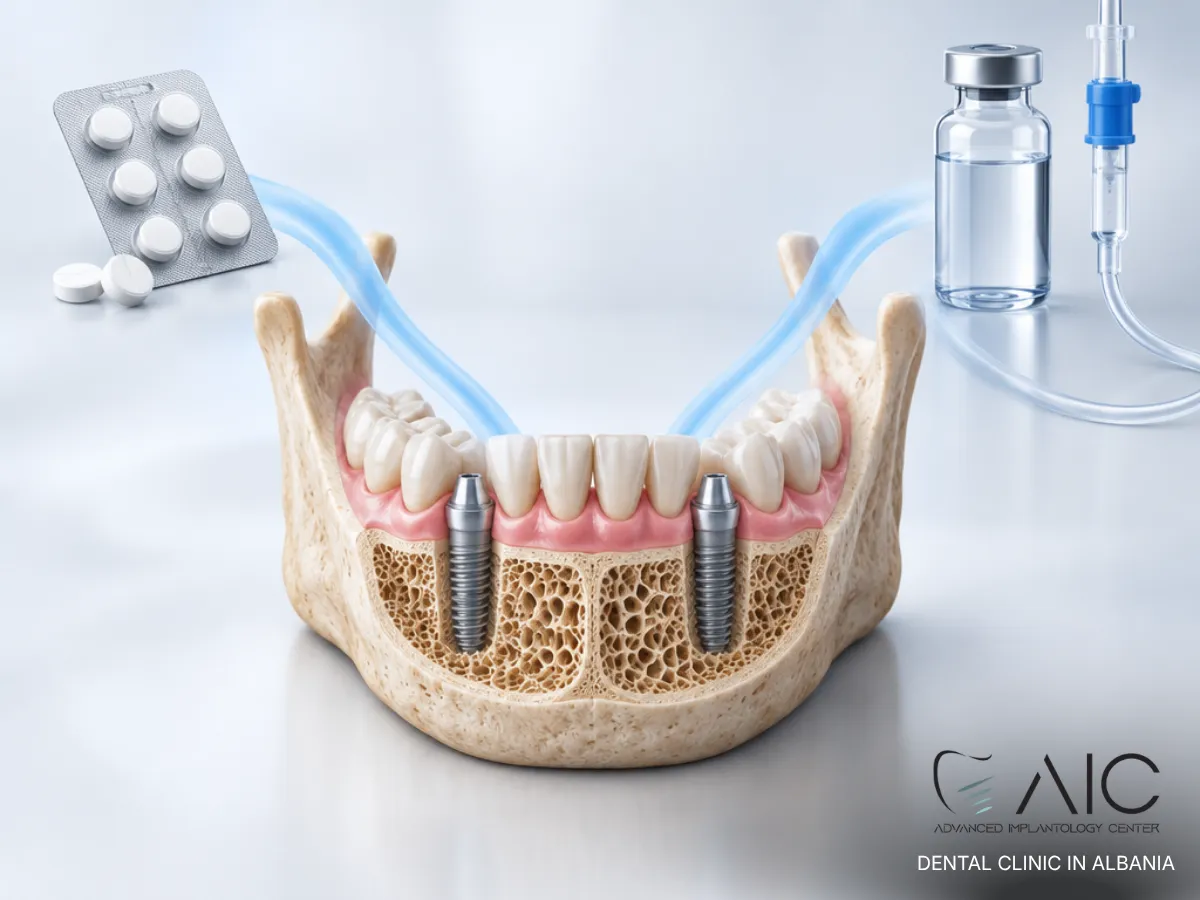
That distinction is important:
- Implant failure means that the implant does not successfully integrate or remain functional.
- MRONJ is a separate, uncommon but potentially serious complication involving impaired healing and necrosis of jawbone associated with certain medications.
Patients interested in treatment should therefore undergo an individualized assessment rather than being accepted or rejected solely because “bisphosphonate” appears on their medication list.
If you are considering treatment, our detailed guide to dental implants and advanced implantology explains how implant candidacy, bone availability and treatment planning are evaluated.
What Are Bisphosphonates?
Bisphosphonates are antiresorptive medications. They reduce the activity of osteoclasts, the cells responsible for breaking down bone during normal bone remodeling.
They are commonly prescribed to reduce fracture risk in conditions involving decreased bone strength.
Examples include:
- alendronate
- risedronate
- ibandronate
- zoledronic acid
Bisphosphonates may be used for osteoporosis, Paget’s disease and certain cancer-related bone conditions.
However, simply knowing the drug name is not enough to estimate dental risk.
The medical indication, dose, frequency, route of administration and duration of treatment all matter.
Why Do Bisphosphonates Matter for Dental Implant Treatment?
Dental implants depend on a biological process called osseointegration. After an implant is placed in the jaw, living bone heals around its titanium surface and establishes stable contact with the implant.
Because bisphosphonates alter bone remodeling, researchers have investigated whether they could influence:
- healing after implant surgery;
- osseointegration;
- long-term implant survival;
- marginal bone levels around implants;
- and the risk of medication-related osteonecrosis of the jaw.
The evidence is not completely uniform.
A 2023 systematic review and meta-analysis reported higher odds of implant failure among bisphosphonate users compared with patients who were not using the medication. However, more recent analyses have not demonstrated a statistically significant increase in implant failure among patients receiving the lower-dose antiresorptive regimens commonly used for osteoporosis.
A 2025 systematic review evaluating antiresorptive therapy found that bisphosphonate treatment did not significantly increase implant failure, while another 2025 International Taskforce review concluded that there was no convincing evidence of increased implant failure in osteoporosis patients receiving antiresorptive treatment.
This is why current clinical decision-making should not rely on a single statistic. The total risk profile of the individual patient matters more.
What Is MRONJ?
MRONJ stands for medication-related osteonecrosis of the jaw.
The American Association of Oral and Maxillofacial Surgeons defines MRONJ using specific clinical criteria involving current or previous exposure to relevant medications, persistent exposed or probeable jawbone and the absence of certain alternative causes such as previous radiation therapy to the jaws.
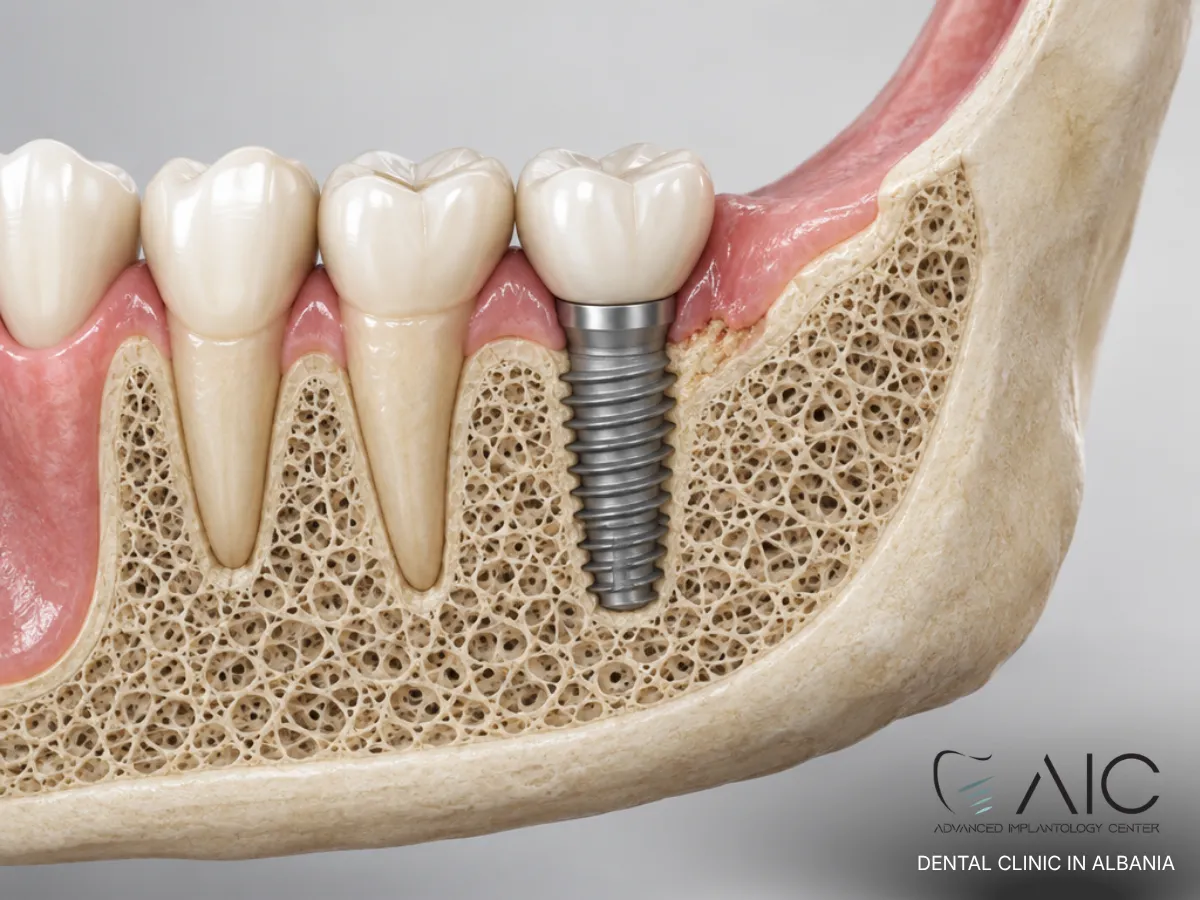
MRONJ is uncommon in patients receiving osteoporosis-level bisphosphonate therapy, but it is important because dental extractions, implant surgery and other procedures involving jawbone can create a healing site.
According to the American Dental Association, MRONJ is considered a rare but serious adverse effect of antiresorptive medications.
The American Association of Oral and Maxillofacial Surgeons has reported an estimated MRONJ risk of approximately 0.02% to 0.04% among patients receiving bisphosphonates for osteoporosis.
Importantly, that estimate describes the broader osteoporosis population and should not be interpreted as the exact risk following dental implant surgery.
A 2025 implant-focused systematic review reported a pooled MRONJ rate of approximately 0.5% among implant recipients exposed to antiresorptive therapy across the included cohorts. The studies were heterogeneous, so this figure should not be applied directly to every individual patient.
Oral Bisphosphonates vs IV Bisphosphonates: Is One More Dangerous?
You may see simplified advice online saying that oral bisphosphonates are safe while intravenous bisphosphonates are dangerous.
That is an incomplete way to assess risk.
The reason the medication is being prescribed, its dose and its treatment schedule are often more clinically important than route alone.
| Medication situation | Typical consideration for dental implants |
|---|---|
| Lower-dose bisphosphonate therapy for osteoporosis | Implants may be considered after individual medical and dental risk assessment. |
| Oral alendronate, risedronate or ibandronate for osteoporosis | Not an automatic contraindication. Duration of therapy and additional risk factors should be reviewed. |
| IV zoledronic acid prescribed at an osteoporosis regimen | Requires careful assessment but should not automatically be treated the same as high-dose oncology treatment. |
| High-dose antiresorptive therapy for cancer or metastatic bone disease | MRONJ risk is substantially more important. Elective implant surgery is generally avoided under current professional guidance. |
This is why patients should provide the implantologist with the exact medication name, dose, frequency, reason for treatment and duration of use.
Bisphosphonates for Osteoporosis and Dental Implants
Osteoporosis itself does not automatically rule out implant therapy.
Recent evidence suggests that many patients with osteoporosis can achieve successful dental implant outcomes when treatment is properly planned.
If osteoporosis is part of your medical history, read our dedicated guide on dental implants and osteoporosis, which explains the relationship between bone density, local jawbone anatomy and implant candidacy in more detail.
It is important to distinguish systemic osteoporosis from the actual quantity and architecture of bone available at a proposed implant site. An implantologist evaluates local bone anatomy using clinical examination and dental imaging, while osteoporosis is a systemic medical condition that is diagnosed and managed separately.
Who May Have a Higher MRONJ Risk?
No test can perfectly predict which patient will develop MRONJ. However, professional guidance identifies several factors that can increase concern.
These can include:
- higher cumulative antiresorptive exposure;
- longer treatment duration;
- high-dose regimens used for malignancy;
- active periodontal disease;
- poor oral hygiene;
- dental or jaw infection;
- smoking;
- diabetes;
- corticosteroid use;
- certain cancer therapies;
- dentures that repeatedly traumatize oral tissues;
- and procedures requiring significant manipulation of jawbone.
Periodontal inflammation is particularly important because implant treatment should ideally begin from a stable oral environment. Patients with gum disease may first require appropriate periodontal treatment before implant surgery is considered.
How Should an Implantologist Assess a Patient Taking Bisphosphonates?
Planning should begin with a detailed medical and dental history.
Your dentist or oral surgeon may need to establish:
- Which medication are you taking?
For example, alendronate, risedronate, ibandronate or zoledronic acid. - Why was it prescribed?
Osteoporosis-level therapy and oncology-level antiresorptive treatment do not carry the same risk profile. - How long have you taken it?
Longer exposure can be relevant when assessing MRONJ risk. - When was your most recent dose?
This can be particularly relevant for injectable medication schedules. - Do you take other medications?
Corticosteroids, chemotherapy, antiangiogenic agents and other treatments may change the overall risk profile. - Is there active dental disease?
Periodontitis, abscesses, failing teeth and other infections should be identified before implant surgery. - How much bone is available?
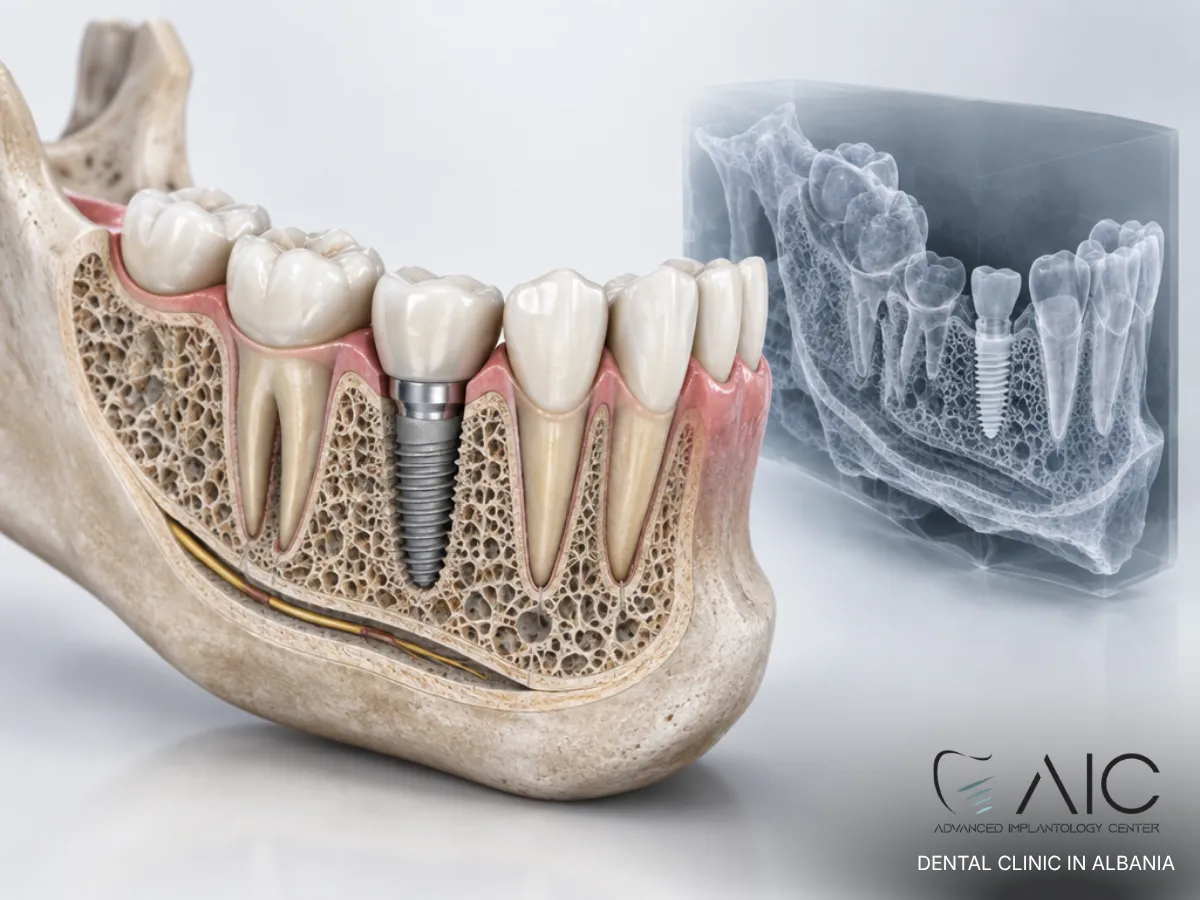
Clinical examination and 3D imaging can help determine the anatomy and volume of bone at the planned implant site.
The goal is not simply to determine whether an implant can physically be placed. The goal is to determine whether it can be placed with an acceptable biological risk and maintained over the long term.
Do You Need to Stop Bisphosphonates Before Dental Implant Surgery?
There is no universal recommendation that every osteoporosis patient should stop bisphosphonates before receiving a dental implant.
The American Dental Association notes that there is insufficient evidence to recommend a routine antiresorptive “drug holiday” solely to prevent MRONJ in osteoporosis patients undergoing dental treatment.
The 2025 International ONJ Taskforce similarly suggested that osteoporosis antiresorptive therapy does not routinely need to be stopped before implant placement, although this recommendation was based on very low-quality evidence.
There are also practical reasons why stopping treatment does not automatically eliminate risk. Bisphosphonates can remain incorporated into bone for prolonged periods, while interrupting osteoporosis treatment can have consequences for fracture prevention.
Patients should therefore never stop bisphosphonate medication on their own.
If any treatment modification is being considered, the decision should involve the clinician managing the patient’s bone condition and the dental surgeon responsible for the implant procedure.
Can a CTX Blood Test Determine Whether Implant Surgery Is Safe?
Some patients are told to obtain a serum C-terminal telopeptide, or CTX, blood test before dental surgery.
Current major guidance does not support using CTX as a reliable stand-alone predictor of MRONJ.
The American Dental Association states that there is insufficient evidence to recommend serum bone-turnover markers such as CTX for predicting MRONJ risk, while AAOMS has similarly stated that bone-turnover biomarkers are not validated for clinical decision-making regarding MRONJ.
A CTX result therefore should not replace a complete medical, medication and dental risk assessment.
Can Bone Grafting Be Performed in Patients Taking Bisphosphonates?
Bone grafting requires additional surgical manipulation and bone healing, so the risk-benefit assessment becomes especially important in patients receiving antiresorptive medication.
Whether grafting is appropriate depends on the medication regimen, medical indication, local anatomy and amount of augmentation required.
When insufficient bone is present, you can learn more about how bone grafting for dental implants is normally used to rebuild jawbone volume before or during implant treatment.
For a patient taking bisphosphonates, however, grafting should never be recommended from imaging alone. The complete systemic risk profile must also be considered.
Can You Have All-on-4 While Taking Bisphosphonates?
Potentially, but the assessment becomes more complex.
All-on-4 dental implants and other full-arch treatments can involve extractions, multiple implant sites and significant oral surgery. The total surgical burden may therefore be greater than replacing a single missing tooth.
For a patient receiving osteoporosis-level bisphosphonate therapy, full-arch implant treatment is not automatically impossible. However, the surgical plan should consider:
- the bisphosphonate regimen;
- duration of therapy;
- need for extractions;
- presence of periodontal or dental infection;
- bone quality and volume;
- need for grafting;
- medical comorbidities;
- and the ability to maintain excellent hygiene after treatment.
Patients receiving high-dose antiresorptive therapy for cancer require a very different assessment, and elective implant placement is generally avoided.
What About Zoledronic Acid and Dental Implants?
Zoledronic acid deserves special attention because the drug can be used in very different medical contexts.
It may be administered according to an osteoporosis treatment schedule, but higher-intensity antiresorptive regimens can also be used in patients with malignancy and metastatic bone disease.
Therefore, a statement such as “I receive zoledronic acid intravenously” is not enough to determine implant eligibility.
The implantologist needs to understand:
- the medical diagnosis;
- the dose;
- the dosing interval;
- how long therapy has been used;
- the date of the latest dose;
- and any accompanying cancer or systemic treatments.
The risk assessment should be coordinated with the treating physician when necessary.
What About Alendronate and Dental Implants?
Alendronate is one of the most commonly prescribed oral bisphosphonates for osteoporosis.
Use of alendronate does not automatically mean that dental implants cannot be placed.
Instead, the implantologist should evaluate treatment duration, oral health, age, smoking, diabetes, steroid therapy, periodontal disease and the extent of the planned surgery.
The potential benefits of implant rehabilitation must then be weighed against the individual surgical and MRONJ risk.
Can Existing Dental Implants Develop Problems After Starting Bisphosphonates?
Implant-related MRONJ is not limited exclusively to newly placed implants.
Cases have also been described around previously osseointegrated implants after antiresorptive therapy has begun.
This does not mean existing implants need to be removed simply because a patient starts osteoporosis treatment.
Instead, maintaining healthy tissues around the implants becomes especially important.
Long-term care should include:
- good daily oral hygiene;
- professional implant maintenance;
- control of periodontal and peri-implant inflammation;
- early assessment of persistent discomfort or swelling;
- and regular dental follow-up.
Symptoms That Should Be Evaluated
Patients taking antiresorptive medications should contact their dental professional if they develop persistent oral symptoms such as:
- exposed bone;
- a wound that does not heal normally;
- persistent pain or swelling;
- drainage or infection;
- loosening of a previously stable implant;
- numbness or unusual altered sensation;
- or a persistent fistula or opening in the gum.
These symptoms do not automatically mean MRONJ is present. Dental infections, peri-implantitis and other conditions can produce similar symptoms, which is why professional evaluation is necessary.
What Does the Latest Research Say?
The best interpretation of current evidence is not that bisphosphonates are completely risk-free, nor that every patient taking them should be denied dental implants.
The research supports a more individualized approach.
A 2025 International ONJ Taskforce systematic review and consensus statement concluded that osteoporosis patients receiving antiresorptive treatment generally do not need to discontinue therapy before dental implant placement and found no evidence of increased implant failure, although the certainty of evidence was very low.
A 2025 systematic review and meta-analysis likewise found no clear increase in implant failure among osteoporosis patients exposed to antiresorptive therapy, while identifying a small but measurable association between bisphosphonate exposure and MRONJ.
Another 2025 systematic review and meta-analysis found that bisphosphonate administration did not significantly increase implant failure overall.
However, an earlier 2023 systematic review and meta-analysis reported higher odds of implant failure among bisphosphonate users.
These differences highlight why it is inappropriate to describe implant treatment as either universally “safe” or universally “contraindicated” for every patient taking a bisphosphonate.
How We Approach Implant Planning in Medically Complex Patients
For patients with osteoporosis, bisphosphonate exposure or other conditions affecting bone metabolism, implant treatment should begin with diagnosis rather than assumptions.
At AIC Dental, complex implant cases are evaluated using a combination of clinical examination, medical history, medication review and three-dimensional imaging when indicated.
When necessary, treatment planning can also involve communication with the patient’s treating physician.
Dr. Klevis Sota, oral surgeon and implantologist, manages advanced implant and full-mouth rehabilitation cases at SOTA Dental – Advanced Implantology Center.
The objective is to determine not only whether implant placement is technically possible, but whether it represents an appropriate treatment option for the individual patient’s medical and dental situation.
Frequently Asked Questions About Bisphosphonates and Dental Implants
Are bisphosphonates an absolute contraindication to dental implants?
No. Lower-dose bisphosphonate treatment for osteoporosis is not considered an automatic contraindication to dental implants. Individual risk assessment is still required. High-dose antiresorptive treatment used for oncology indications carries a substantially different risk profile, and elective implant surgery is generally avoided.
Can I have dental implants while taking alendronate?
Possibly. Alendronate use for osteoporosis does not automatically exclude implant treatment. Duration of therapy, oral health, other medications, systemic health and the extent of surgery should all be assessed first.
Can I have dental implants after zoledronic acid?
The answer depends strongly on why zoledronic acid was prescribed, the dose and frequency of treatment and other medical factors. Zoledronic acid used for osteoporosis should not automatically be considered equivalent to high-dose antiresorptive treatment used in oncology.
How long should I stop bisphosphonates before dental implants?
There is no universal evidence-based waiting period for every patient. Routine drug holidays are not supported for all osteoporosis patients, and you should never discontinue bisphosphonates without discussing the decision with the physician who prescribed them.
Does stopping bisphosphonates eliminate the risk of jaw osteonecrosis?
No. Bisphosphonates remain associated with bone for prolonged periods, so stopping medication does not immediately eliminate MRONJ risk. The potential consequences of interrupting osteoporosis treatment must also be considered.
Should I have a CTX test before implant surgery?
Current major professional guidance does not consider CTX or other bone-turnover markers sufficiently validated to predict an individual’s MRONJ risk. They should not replace a comprehensive clinical and medical assessment.
Can osteoporosis itself cause dental implants to fail?
Osteoporosis alone does not appear to automatically prevent successful osseointegration. Implant candidacy depends on local jawbone anatomy, oral health, systemic health, medication exposure and other clinical factors. See our complete guide to osteoporosis and dental implants for more information.
Can I get full-mouth implants if I take bisphosphonates?
Some osteoporosis patients may still be candidates, but full-mouth rehabilitation often involves more extensive surgery than a single implant. Extractions, number of implant sites, active infections, medication history, bone volume and overall health all need to be evaluated before treatment.
Bottom Line: Bisphosphonates Do Not Automatically Mean “No Dental Implants”
For patients taking bisphosphonates for osteoporosis, dental implants may still be a realistic treatment option.
The decision should not be based only on whether a patient takes a bisphosphonate. A proper assessment should consider why the medication is being used, the dose, treatment schedule, duration, other medications, systemic health, oral disease, bone anatomy and the extent of the proposed implant surgery.
For patients receiving high-dose antiresorptive treatment for cancer, the situation is substantially different and elective implant placement is generally avoided because of the greater MRONJ concern.
If you take alendronate, risedronate, ibandronate, zoledronic acid or another medication affecting bone metabolism and are considering dental implants, bring a complete medication history to your consultation.
You can book an implant assessment at AIC Dental so that your dental anatomy, medical history and medication profile can be evaluated together before any treatment is recommended.
Medical disclaimer: This article provides general educational information and is not a substitute for diagnosis or individualized medical or dental advice. Decisions regarding antiresorptive medication and oral surgery should be made together with the relevant dental and medical professionals.