
Yes, many people who have had gum disease can still receive dental implants.
Having a history of periodontitis does not automatically mean that you are unsuitable for implant treatment.
There is, however, an important condition:
active periodontal disease should usually be treated and brought under control before dental implants are placed.
This matters because periodontitis damages the gums and bone supporting natural teeth, while dental implants also depend on healthy surrounding tissues and adequate bone for long-term stability.
Patients who have previously had periodontitis can achieve successful implant treatment, but research consistently shows that they remain at greater risk of:
- peri-implantitis;
- marginal bone loss;
- and, over the long term, implant loss
than patients who have never experienced periodontitis.
A modern implant treatment plan therefore should not simply replace teeth that were lost to gum disease. It should first address why those teeth were lost and create a healthier, maintainable environment for the implants that will replace them.
In this guide, we explain when dental implants are possible after gum disease, when treatment should be delayed, how periodontal disease affects implant success, and what patients can do to reduce their future risk.
This article is intended for general education and cannot determine individual implant candidacy. A clinical periodontal and implant assessment is required before treatment.
Can you get dental implants if you have gum disease?
The answer depends largely on whether the gum disease is active or previously treated and stable.
Active periodontitis
Placing elective implants while significant periodontal inflammation remains uncontrolled is generally not the preferred approach.
Active periodontitis may involve:
- deep periodontal pockets;
- bleeding gums;
- suppuration;
- progressive bone loss;
- tooth mobility;
- and high levels of bacterial plaque.
These conditions create an unfavorable environment for long-term implant therapy.
Treated and stable periodontitis
If the periodontal disease has been treated successfully, plaque control is good, and the remaining teeth and gums are stable, implant treatment may become possible.
The European Federation of Periodontology recommends that gingivitis and periodontitis be treated to a stable endpoint before implant placement and that patients adhere to a supportive periodontal care program.
In other words:
previous gum disease is a risk factor, not necessarily a permanent contraindication.
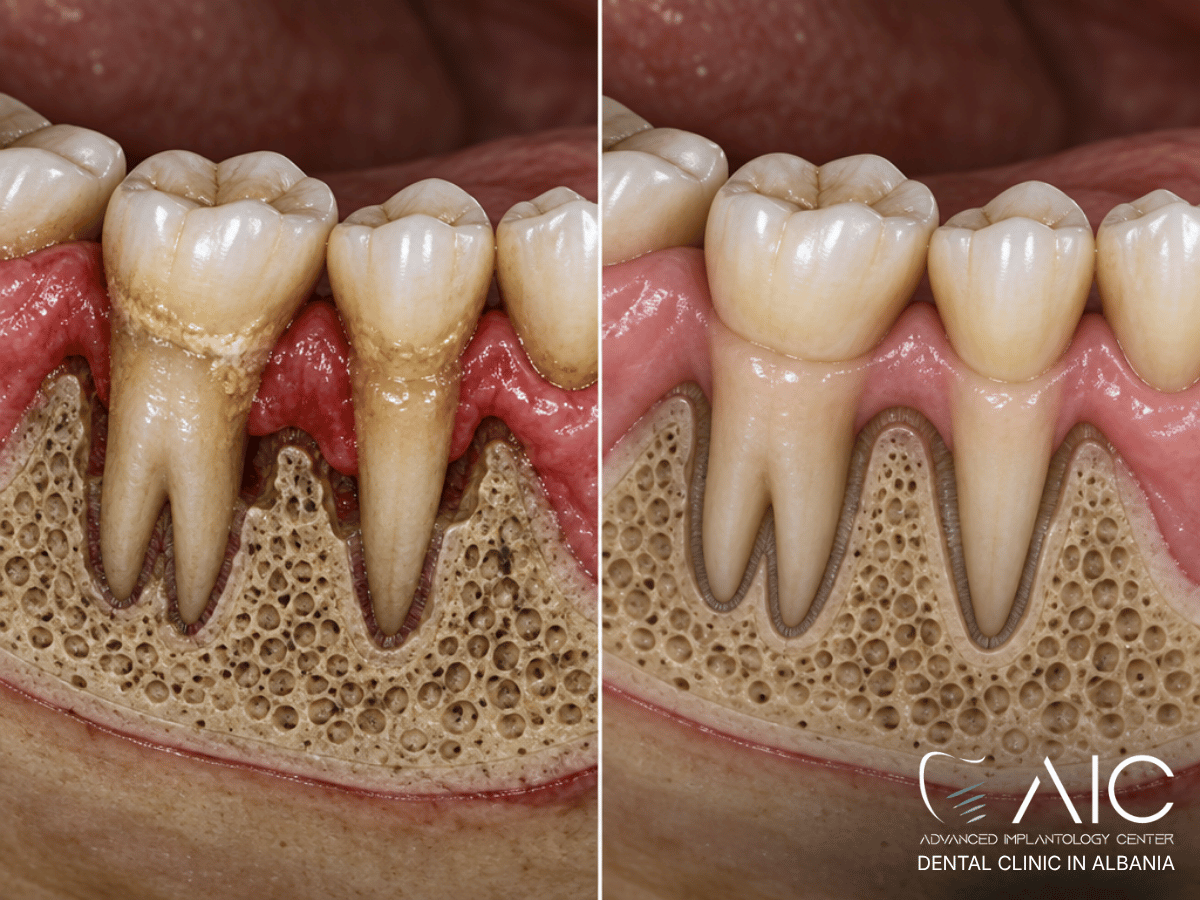
What is periodontitis?
Periodontitis is a chronic inflammatory disease affecting the tissues that support natural teeth.
It develops when plaque-associated inflammation progresses beyond the superficial gum tissues and damages structures such as:
- periodontal ligament;
- cementum;
- and alveolar bone.
Over time, advanced periodontitis can cause:
- gum recession;
- deep periodontal pockets;
- bone loss;
- tooth migration;
- loose teeth;
- and eventual tooth loss.
If you currently have bleeding gums, periodontal pockets, loose teeth or supporting bone loss, our periodontics service focuses on diagnosing and treating the gum and supporting tissues before restorative or implant treatment is planned.
Why does previous gum disease matter for dental implants?
Natural teeth and dental implants are not attached to the bone in exactly the same way.
A natural tooth has a periodontal ligament between its root and surrounding bone.
An osseointegrated dental implant instead has direct contact between its titanium surface and bone.
Despite these anatomical differences, both teeth and implants are surrounded by soft tissues that can become inflamed when bacterial biofilm accumulates.
A patient who has previously developed destructive periodontitis may therefore remain more susceptible to inflammatory disease around implants.
What does the research show?
Modern studies do not support the idea that patients with previous periodontitis can never have implants.
They do, however, show that their risk profile is different.
A large systematic review and meta-analysis of prospective cohort studies evaluating patients with and without a history of periodontitis found that patients with previous periodontitis had:
- a significantly greater risk of implant loss;
- greater marginal bone loss;
- and a substantially higher risk of peri-implantitis.
In that analysis, the hazard ratio for implant loss was approximately 1.75, while the relative measure for peri-implantitis was approximately 3.24 compared with patients without a history of periodontitis.
The difference became particularly important during longer follow-up periods and in patients with more severe or rapidly progressing forms of periodontal disease.
These figures describe population-level associations. They do not mean that an individual patient with previous periodontitis has a 75% chance of losing an implant or is certain to develop peri-implantitis.
Individual risk depends on many additional factors.
Does gum disease have to be treated before implants?
Yes, active periodontal disease should generally be controlled before elective implant placement.
The objective is not simply to make the gums “look better.”
Periodontal treatment should create a stable oral environment in which:
- inflammation is controlled;
- periodontal pockets have improved;
- plaque levels are manageable;
- remaining teeth have a reasonable prognosis;
- and the patient can maintain the mouth effectively at home.
The EFP prevention guideline for peri-implant diseases recommends reaching periodontal stability before implant placement.
It describes a stable periodontal endpoint as probing depths of 4 mm or less without bleeding on probing at these sites.
This should be interpreted as part of a complete periodontal assessment rather than as a single number that automatically approves or excludes a patient.
How is gum disease treated before dental implants?
The exact treatment depends on the stage and distribution of the disease.
It may involve:
- professional plaque and calculus removal;
- oral-hygiene instruction;
- subgingival periodontal instrumentation;
- management of local plaque-retentive factors;
- smoking cessation support;
- management of diabetes when relevant;
- periodontal surgery in selected cases;
- and extraction of teeth with a hopeless prognosis.
After treatment, the gums are reassessed before the definitive implant plan is confirmed.
How long after gum disease treatment can you get implants?
There is no universal waiting period such as three months or six months that applies to every patient.
The appropriate timing depends more on periodontal stability and the planned procedure than on the calendar alone.
The implant team may evaluate:
- bleeding on probing;
- remaining periodontal pocket depths;
- plaque control;
- tooth prognosis;
- healing after extractions;
- available bone;
- need for bone grafting;
- smoking;
- diabetes;
- and adherence to periodontal maintenance.
A patient whose disease becomes stable quickly may follow a different timeline from someone with severe generalized periodontitis requiring multiple stages of treatment.
Can dental implants be placed immediately after removing teeth with periodontitis?
Sometimes, but not in every case.
Immediate implant placement means placing the implant during the same procedure in which the tooth is removed.
Whether this is appropriate after a tooth affected by periodontal disease depends on factors such as:
- remaining socket anatomy;
- extent of bone destruction;
- ability to achieve primary implant stability;
- soft-tissue condition;
- local infection control;
- planned three-dimensional implant position;
- and the patient’s overall risk profile.
In other cases it may be safer to remove the tooth, treat the diseased tissues, allow healing or regenerate the bone, and place the implant later.
Immediate placement should therefore be based on individual anatomy rather than simply on the patient’s preference for faster treatment.
Can severe periodontitis cause too much bone loss for implants?
It can.
Advanced periodontal disease can destroy a substantial amount of the alveolar bone that previously supported the teeth.
After the tooth is removed, additional remodeling of the ridge can occur.
This may leave inadequate bone width or height for a conventional implant.
However, bone loss does not automatically mean implant treatment is impossible.
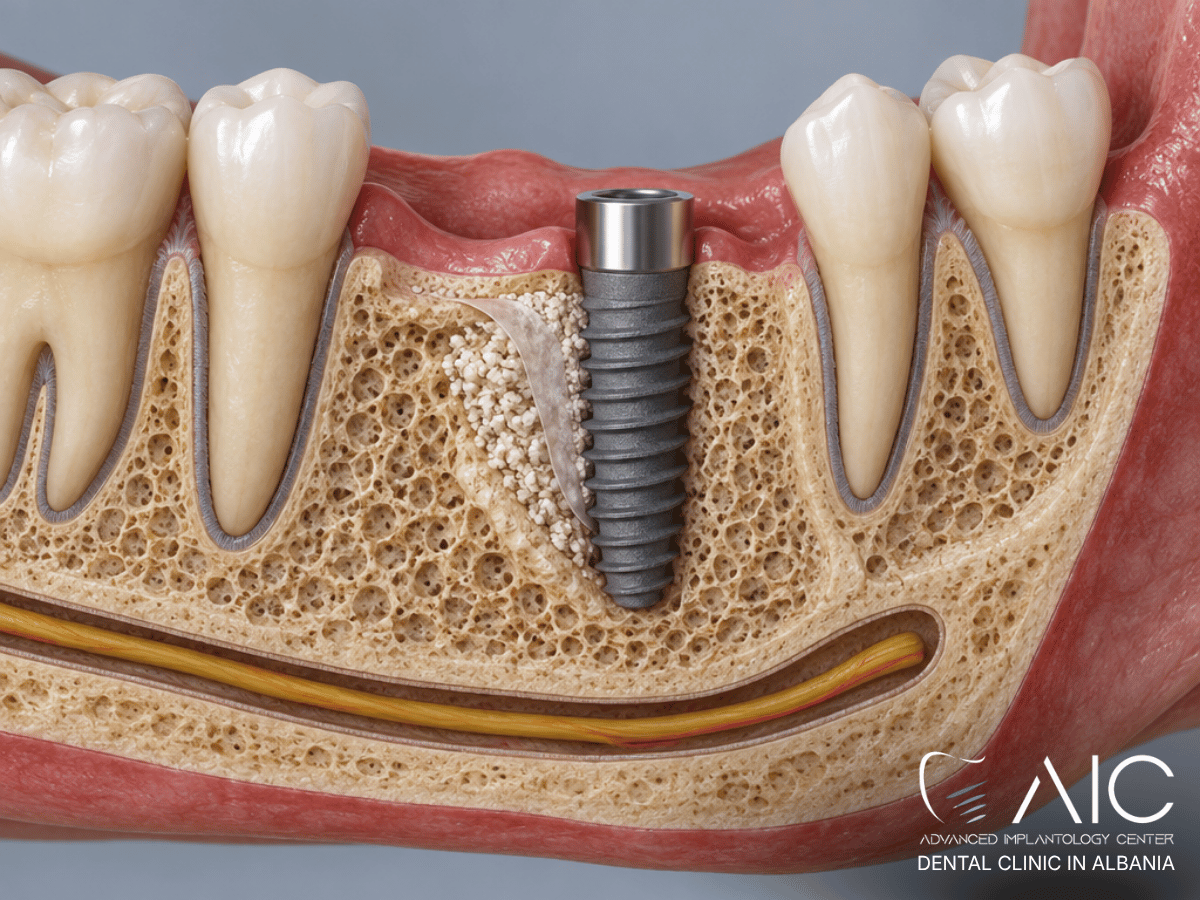
Depending on the anatomy, treatment may involve:
- guided bone regeneration;
- ridge augmentation;
- socket reconstruction;
- sinus augmentation in the upper posterior jaw;
- or an alternative implant position or restorative plan.
Our guide to bone grafting for dental implants explains how deficient bone can sometimes be reconstructed before or during implant therapy.
Do you always need a bone graft after periodontitis?
No.
The diagnosis of periodontitis alone does not determine whether a graft is necessary.
The decision is based on the local anatomy at the implant site.
Some patients have enough bone remaining for implant placement despite previous periodontal disease.
Others may have:
- horizontal ridge deficiency;
- vertical bone loss;
- irregular extraction defects;
- thin buccal bone;
- or inadequate sinus-floor bone height.
Clinical examination and three-dimensional imaging can help determine whether augmentation is required.
Can implants replace teeth lost from gum disease?
Yes.
This is one of the common reasons patients seek implant treatment.
Implants can potentially replace:
- one tooth;
- several teeth;
- or an entire dental arch.
The critical step is making sure that replacing the missing teeth does not ignore the disease process that caused the original tooth loss.
If uncontrolled plaque, smoking, active periodontitis or poor maintenance continue after the implants are placed, the new reconstruction remains at greater risk.
You can review our main dental implant treatment options for single teeth, multiple missing teeth and full-arch rehabilitation.
Can you get full-mouth implants after severe periodontal disease?
Potentially, yes.
Some patients with advanced stage III or stage IV periodontitis eventually require extraction of multiple teeth and a full-arch implant-supported restoration.
However, removing the teeth does not erase the patient’s underlying susceptibility to inflammatory disease.
Before full-mouth implant treatment, the clinician must consider:
- periodontal disease activity;
- remaining infected or hopeless teeth;
- amount of bone loss;
- implant distribution;
- soft-tissue anatomy;
- smoking;
- diabetes;
- ability to clean beneath the final prosthesis;
- and willingness to attend long-term maintenance.
A full-arch bridge that cannot be cleaned properly can become a long-term biological problem even if the surgery itself is technically successful.
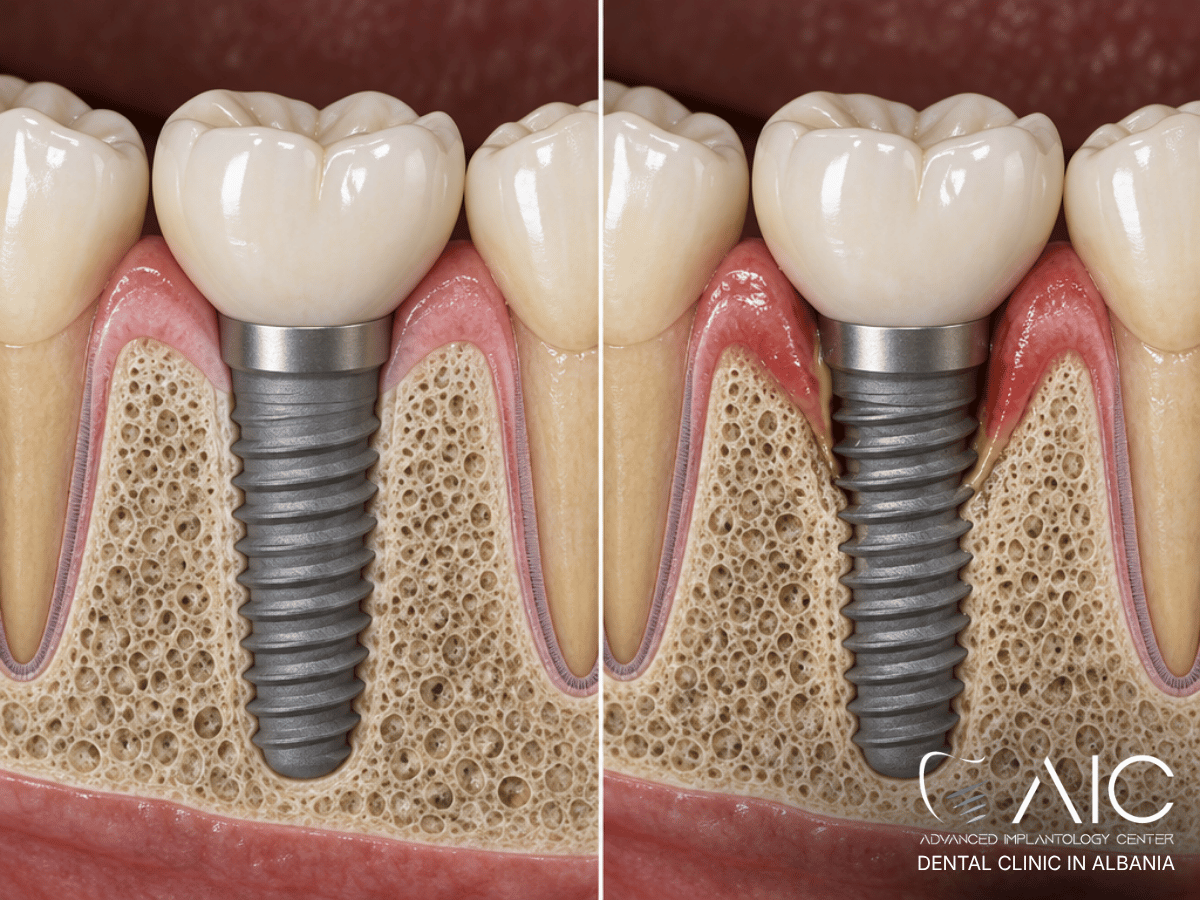
What is peri-implantitis?
Peri-implantitis is not exactly the same disease as periodontitis, but the conditions share important characteristics.
Both involve plaque-associated inflammation and destruction of supporting tissues.
Peri-implant diseases are generally divided into two main categories.
Peri-implant mucositis
Inflammation affects the soft tissues surrounding the implant without progressive loss of supporting bone.
It can often be reversed if identified and treated early.
Peri-implantitis
Inflammation is associated with progressive deterioration of the bone supporting the implant.
Possible signs include:
- bleeding during professional probing;
- suppuration;
- increased probing depths;
- gum recession;
- exposed implant threads;
- and progressive radiographic bone loss.
Our detailed guide to dental implant infection and peri-implantitis explains these complications separately.
Does periodontitis “spread” to dental implants?
It is more accurate to say that a patient with a history of periodontitis can remain susceptible to plaque-associated inflammatory disease around implants.
Periodontitis does not simply jump from a tooth onto an implant like an isolated infection spreading from one object to another.
Rather, several underlying factors may remain present:
- susceptibility to destructive inflammation;
- pathogenic biofilm;
- poor plaque control;
- smoking;
- diabetes;
- and inadequate professional maintenance.
These factors can contribute to the development of peri-implant disease.
How much higher is peri-implantitis risk after periodontitis?
A recent prospective-cohort meta-analysis found that a history of periodontitis was associated with more than three times the relative measure of peri-implantitis compared with patients who had no history of periodontal disease.
Another 2024 systematic review of prospective studies also found a significantly greater incidence of peri-implantitis and marginal bone loss among periodontally compromised patients.
This does not mean that peri-implantitis is inevitable.
It means that these patients should be treated as a higher-risk implant population.
Does severe or aggressive periodontitis create a greater risk?
The available evidence suggests that it can.
The risk does not appear to be identical for every history of gum disease.
Recent meta-analysis found particularly unfavorable implant outcomes in patients with a history of:
- more severe stage III or IV periodontitis;
- rapidly progressing disease;
- and long-term follow-up.
Patients previously described as having “aggressive periodontitis,” now generally classified within staging and grading systems such as Grade C periodontitis, may therefore require especially careful risk assessment.
Does previous periodontitis mean the implant will fail?
No.
Higher risk is not the same as inevitable failure.
Many patients treated for periodontitis maintain successful implants for many years.
A systematic review of periodontally compromised patients reported high implant survival when periodontal disease was properly treated and patients attended regular maintenance.
The goal is therefore not to exclude every patient who has ever had gum disease.
The goal is to:
- control the disease;
- evaluate the remaining anatomy;
- identify modifiable risk factors;
- design a cleanable implant restoration;
- and maintain the result long term.
Why maintenance matters so much after implants
Implant treatment does not end when the crown or bridge is fitted.
This is particularly important for patients with previous periodontal disease.
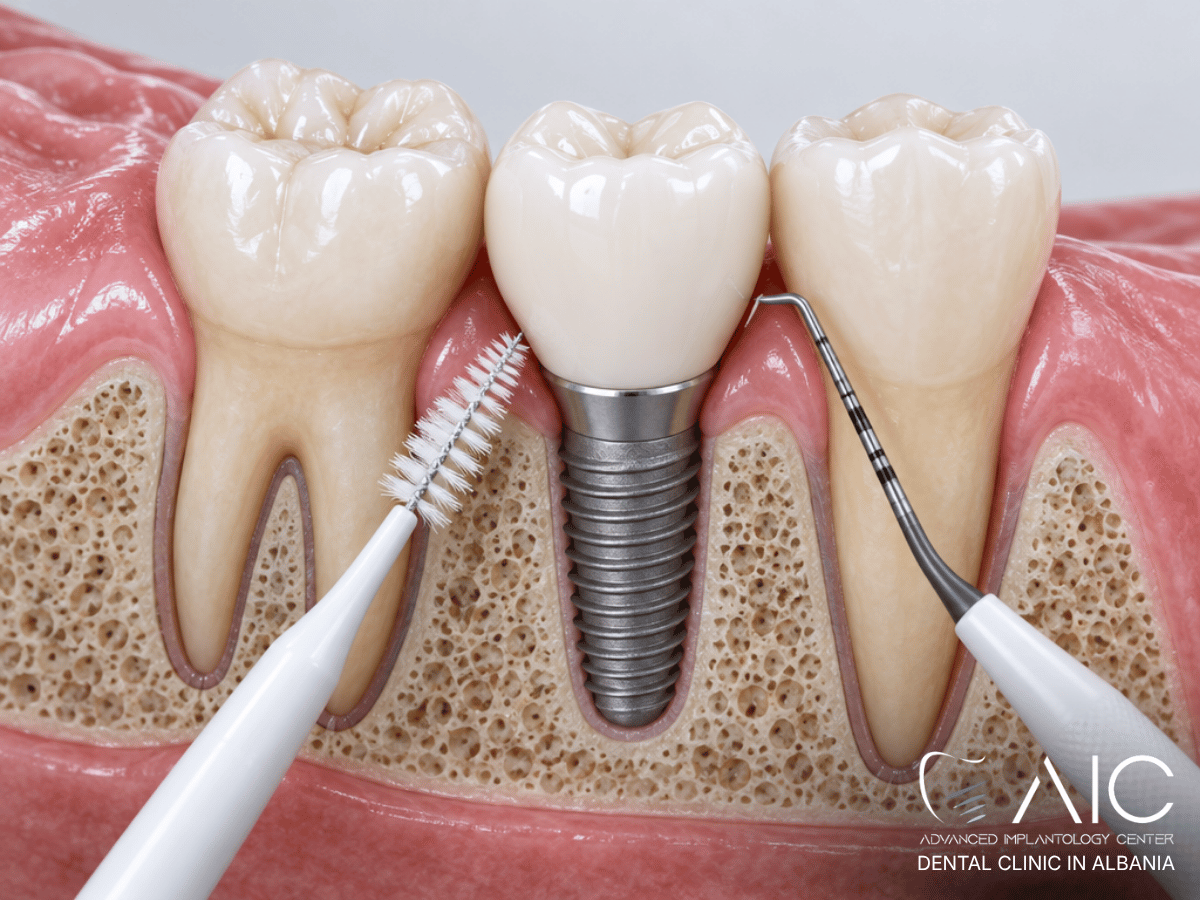
Long-term supportive care may include:
- professional plaque removal;
- periodontal probing around remaining teeth;
- peri-implant probing when appropriate;
- assessment for bleeding or suppuration;
- monitoring of gum recession;
- radiographs when clinically indicated;
- checking the implant-supported restoration;
- and reinforcement of home cleaning.
A 2026 systematic review evaluating supportive peri-implant therapy found that individualized, risk-based maintenance was consistently associated with better clinical outcomes than standard or absent maintenance.
Patients with previous periodontitis should therefore expect a long-term maintenance program rather than a “fit and forget” implant treatment.
How often should implants be professionally cleaned after periodontitis?
There is no single recall interval that is correct for every patient.
The interval should be individualized according to risk.
Factors include:
- previous severity of periodontitis;
- current plaque levels;
- residual periodontal pockets;
- smoking;
- diabetes;
- number and design of implants;
- type of implant-supported prosthesis;
- and previous peri-implant inflammation.
A higher-risk patient may require substantially closer professional monitoring than someone without a history of periodontal disease.
Smoking, gum disease and dental implants
Smoking deserves particular attention because it can combine with previous periodontitis to create a less favorable implant environment.
The 2025 AO/AAP consensus identifies both:
- history of periodontitis;
- and smoking
as major risk indicators for peri-implant disease.
Smoking can also affect:
- healing;
- osseointegration;
- marginal bone stability;
- and peri-implant inflammatory disease.
A patient who has previously lost teeth from periodontitis and continues to smoke therefore requires a particularly careful risk discussion.
Diabetes, periodontitis and implants
Diabetes does not automatically prevent implant treatment either.
However, poor glycemic control can negatively affect periodontal and peri-implant health.
The combination of:
- previous periodontitis;
- poor plaque control;
- and uncontrolled diabetes
can substantially change the patient’s risk profile.
For patients with diabetes, implant planning may therefore include assessment of glycemic control as well as periodontal stability.
What if some teeth can still be saved?
Having advanced periodontal disease does not automatically mean that every remaining tooth should be extracted and replaced with implants.
Natural teeth with a reasonable prognosis should be assessed individually.
A modern periodontal and implant treatment plan may combine:
- preservation of treatable natural teeth;
- periodontal therapy;
- strategic extraction of hopeless teeth;
- implant replacement only where necessary;
- and fixed or removable prosthetic rehabilitation.
Implants should solve a tooth-replacement problem, not become an automatic substitute for teeth that could predictably be maintained.
How do dentists decide whether periodontal teeth are hopeless?
The decision may consider:
- amount and pattern of bone loss;
- tooth mobility;
- furcation involvement;
- remaining periodontal attachment;
- root anatomy;
- tooth restorability;
- endodontic condition;
- strategic importance;
- patient hygiene;
- smoking;
- and response to periodontal treatment.
The prognosis of a tooth cannot be determined only from how much bone appears to be missing on one radiograph.
What tests are needed before implants after gum disease?
A complete evaluation may include:
- medical history;
- smoking history;
- periodontal charting;
- probing depths;
- bleeding on probing;
- tooth mobility;
- plaque assessment;
- dental radiographs;
- assessment of existing bone loss;
- CBCT imaging when indicated for implant planning;
- and evaluation of the planned prosthesis.
The purpose is not simply to determine whether there is enough bone for an implant.
The clinician must also determine whether the mouth can remain healthy around the future restoration.
Why does implant position matter in former periodontitis patients?
An implant can be perfectly integrated into bone and still be difficult to maintain if positioned incorrectly.
The EFP prevention guideline emphasizes three-dimensional prosthetically guided implant positioning.
The implant should allow:
- adequate bone around the fixture;
- appropriate distance from neighboring teeth and implants;
- a manageable soft-tissue depth;
- access for home cleaning;
- professional probing;
- and professional plaque removal.
This becomes especially important in a patient who already has a higher biological risk because of previous periodontal disease.
Why must the implant crown or bridge be easy to clean?
The implant itself is only one component of treatment.
The shape of the final restoration strongly influences whether the patient can remove plaque effectively.
A poorly designed restoration may create:
- deep inaccessible spaces;
- plaque-retentive contours;
- difficulty using interdental brushes;
- difficulty cleaning beneath a bridge;
- and difficulty performing professional maintenance.
The EFP therefore recommends prosthetic designs that permit good access for patient-performed oral hygiene and professional monitoring.
What are the warning signs around an implant?
Patients with previous periodontitis should not wait for an implant to become painful before requesting an assessment.
Possible warning signs include:
- bleeding while brushing around the implant;
- red or swollen gums;
- pus;
- persistent bad taste;
- gum recession;
- increasing exposure of implant threads;
- change in the fit of the prosthesis;
- and progressive bone loss identified during professional review.
Peri-implantitis can develop with limited pain, particularly during earlier stages.
Can gum disease return after all natural teeth have been removed?
If no natural teeth remain, the patient can no longer develop periodontitis around those missing teeth.
However, removing all teeth does not make the mouth immune to inflammatory disease.
Dental implants can still develop:
- peri-implant mucositis;
- and peri-implantitis.
Patients who lost their teeth because of periodontitis may remain at increased risk of these complications.
This is one reason full-mouth implant rehabilitation still requires ongoing professional maintenance.
What makes someone a good implant candidate after periodontitis?
A favorable candidate generally has:
- periodontal disease that has been treated and stabilized;
- good daily plaque control;
- a willingness to attend long-term maintenance;
- adequate bone or a realistic augmentation plan;
- manageable systemic health conditions;
- controlled diabetes where relevant;
- no uncontrolled infection;
- a favorable smoking profile or willingness to stop smoking;
- and an implant-supported restoration that can be properly cleaned.
When should implant treatment be delayed?
Implant treatment may need to be postponed when there is:
- active uncontrolled periodontitis;
- poor plaque control;
- significant untreated gingival inflammation;
- unresolved periodontal infection;
- uncertain prognosis of neighboring teeth;
- uncontrolled diabetes;
- heavy smoking combined with other major risk factors;
- insufficient bone requiring prior reconstruction;
- or an inability to maintain the future implant restoration.
Delaying treatment does not necessarily mean implants will never be possible.
It may simply provide time to improve the biological conditions before placing them.
Can implants actually help after periodontal tooth loss?
When appropriately planned, implants can restore function after teeth have been lost because of periodontal disease.
They may improve:
- chewing stability;
- speech;
- support for fixed restorations;
- and quality of life.
But successful implant therapy in a periodontal patient should be viewed as rehabilitation of a previously diseased mouth, not simply replacement of missing hardware.
The periodontal foundation, patient behavior and maintenance remain central to the long-term result.
Frequently Asked Questions About Dental Implants and Gum Disease
Can you get dental implants with gum disease?
Active gum disease should generally be treated before elective implant placement. Once periodontitis has been successfully treated and the tissues are stable, many patients can become candidates for implants.
Can you get implants after periodontitis?
Yes. Previous periodontitis does not automatically exclude implant treatment, but it is associated with greater long-term risks of peri-implantitis, marginal bone loss and implant loss.
Do I have to cure gum disease before getting implants?
Periodontitis is usually described as a condition that can be successfully treated and controlled rather than permanently “cured.” Implant placement should generally occur after active disease has been treated and periodontal stability has been achieved.
How long after periodontal treatment can I have implants?
There is no universal waiting period. Timing depends on periodontal stability, healing, remaining bone, planned extractions or grafting and the overall implant treatment plan.
Can implants be placed where gum disease caused bone loss?
Sometimes. If sufficient bone remains, conventional implant placement may be possible. If the ridge is deficient, bone augmentation may be needed first or at the time of implant placement.
Does everyone with periodontitis need a bone graft?
No. Bone grafting is determined by the anatomy of the specific implant site, not simply by the diagnosis of periodontal disease.
Can severe gum disease make me unsuitable for implants?
Severe active disease can make immediate implant treatment inappropriate. After periodontal therapy, extraction of hopeless teeth and possible bone reconstruction, implant treatment may still be possible in selected patients.
Are implants better than keeping teeth with gum disease?
Not automatically. Treatable natural teeth should be assessed for preservation. Implants are excellent replacements for missing or hopeless teeth but should not be viewed as inherently superior to maintainable natural teeth.
Can periodontal bacteria infect implants?
Dental implants can develop plaque-associated inflammatory diseases. A history of periodontitis is a recognized risk indicator for peri-implantitis, although the condition is not simply periodontitis transferred directly from one tooth to an implant.
Can you get peri-implantitis even after gum disease has been treated?
Yes. Successful periodontal treatment reduces active disease but does not eliminate a patient’s lifetime susceptibility. Long-term supportive periodontal and peri-implant care remains important.
How likely are implants to fail after periodontitis?
There is no single failure percentage that applies to every patient. Recent prospective evidence shows a higher relative risk of implant loss in patients with previous periodontitis, but many treated and well-maintained periodontal patients have successful implants for many years.
Does smoking matter if I previously had gum disease?
Yes. Both previous periodontitis and smoking are recognized risk indicators for peri-implant disease, so their combination can create a less favorable risk profile.
Can diabetics with periodontal disease have implants?
Potentially yes, but periodontal stability and glycemic control should be evaluated carefully. Uncontrolled diabetes is another recognized risk factor for peri-implant disease.
Can I get All-on-4 after periodontal disease?
Potentially. Full-arch implant treatment may be considered after severe periodontal tooth loss, but active disease, remaining infected teeth, bone anatomy, smoking, systemic health and long-term hygiene must all be evaluated.
Do implants need periodontal maintenance?
Yes. Patients with previous periodontitis should generally remain in an individualized supportive periodontal and peri-implant maintenance program after implant treatment.
Dental Implants After Periodontitis: The Bottom Line
Having had gum disease does not automatically mean you cannot have dental implants.
The more important distinction is between:
- active uncontrolled periodontal disease;
- and a history of periodontitis that has been successfully treated and stabilized.
Implants should generally not be considered a shortcut around untreated gum disease.
The periodontal infection and inflammation should first be brought under control, remaining teeth should be assessed, oral hygiene should be improved and the future restoration should be planned so that it can be cleaned effectively.
Once these conditions are achieved, many patients who previously lost teeth because of periodontitis can successfully receive dental implants.
However, their long-term risk does remain higher than that of patients without a history of periodontal disease.
Current research associates previous periodontitis with:
- greater marginal bone loss;
- higher peri-implantitis risk;
- and a higher long-term risk of implant loss.
This makes maintenance particularly important.
Successful treatment therefore depends on more than simply placing an implant into available bone.
A strong long-term strategy includes:
- treating active periodontitis;
- reaching periodontal stability;
- assessing remaining bone;
- controlling smoking, diabetes and other modifiable risks;
- placing implants in an anatomically and prosthetically favorable position;
- designing a restoration that can be cleaned;
- and maintaining both teeth and implants for life.
At SOTA Dental – Advanced Implantology Center, patients who have lost teeth because of periodontal disease can be evaluated through both periodontal and implant assessment to determine whether the gums and supporting bone are ready for implant treatment.
Learn more about our periodontal treatment, dental implant options and bone grafting procedures.
Scientific References
Roccuzzo M et al. Effectiveness of Implant Therapy in Patients With and Without a History of Periodontitis: A Systematic Review With Meta-Analysis of Prospective Cohort Studies. PMID: 39466662.
Serroni M et al. History of periodontitis as a risk factor for implant failure and incidence of peri-implantitis: A systematic review, meta-analysis, and trial sequential analysis of prospective cohort studies. PMID: 38720611.
European Federation of Periodontology. Evidence-based clinical practice guideline for prevention and treatment of peri-implant diseases.
Academy of Osseointegration / American Academy of Periodontology. Consensus on prevention and management of peri-implant diseases and conditions. PMID: 40501397.
American Academy of Periodontology. Peri-Implant Diseases.
Gissler BB et al. Systematic review of adherence to supportive periodontal and peri-implant care. PMID: 41114452.
Supportive peri-implant therapy systematic review, 2026. PMID: 41204923.
Medical disclaimer: This article provides general educational information and does not determine whether an individual patient is suitable for dental implants. Periodontal disease status, bone anatomy, medical history and implant candidacy require professional clinical assessment.