
A dental implant infection should not be ignored. Infection and inflammation can affect the gum around an implant and, if disease progresses, the bone that keeps the implant stable.
However, redness, tenderness or swelling immediately after implant surgery does not automatically mean the implant is infected. Some inflammation is part of normal surgical healing.
The important questions are when the symptoms started, whether they are improving or worsening, whether there is bleeding or pus, and whether the supporting bone is affected.
An implant-related infection can develop shortly after surgery, but problems can also appear months or even years after an implant has successfully integrated.
This guide explains the symptoms of a dental implant infection, the difference between an early postoperative infection and peri-implantitis, why implants become infected, how dentists diagnose the problem and whether an infected dental implant can be saved.
If you are researching implant treatment rather than experiencing a complication, see our complete guide to dental implants and advanced implantology.
This article is intended for general education and does not diagnose an implant infection. Swelling, pus, increasing pain, fever, implant mobility or other concerning symptoms should be assessed by a dental professional.
What Is a Dental Implant Infection?
The phrase dental implant infection is commonly used by patients to describe inflammation or bacterial infection affecting the tissues around a dental implant.
Clinically, however, several different situations can exist.
The most important are:
- Early postoperative infection – develops during the healing period after implant surgery.
- Peri-implant mucositis – inflammation limited mainly to the soft tissue surrounding an implant without progressive supporting bone loss.
- Peri-implantitis – inflammation around an implant associated with progressive loss of supporting bone.
The American Academy of Periodontology describes peri-implant diseases as inflammatory conditions affecting the soft and hard tissues surrounding dental implants.
This distinction is important because early soft-tissue inflammation can often be managed more simply than established peri-implantitis involving supporting bone.
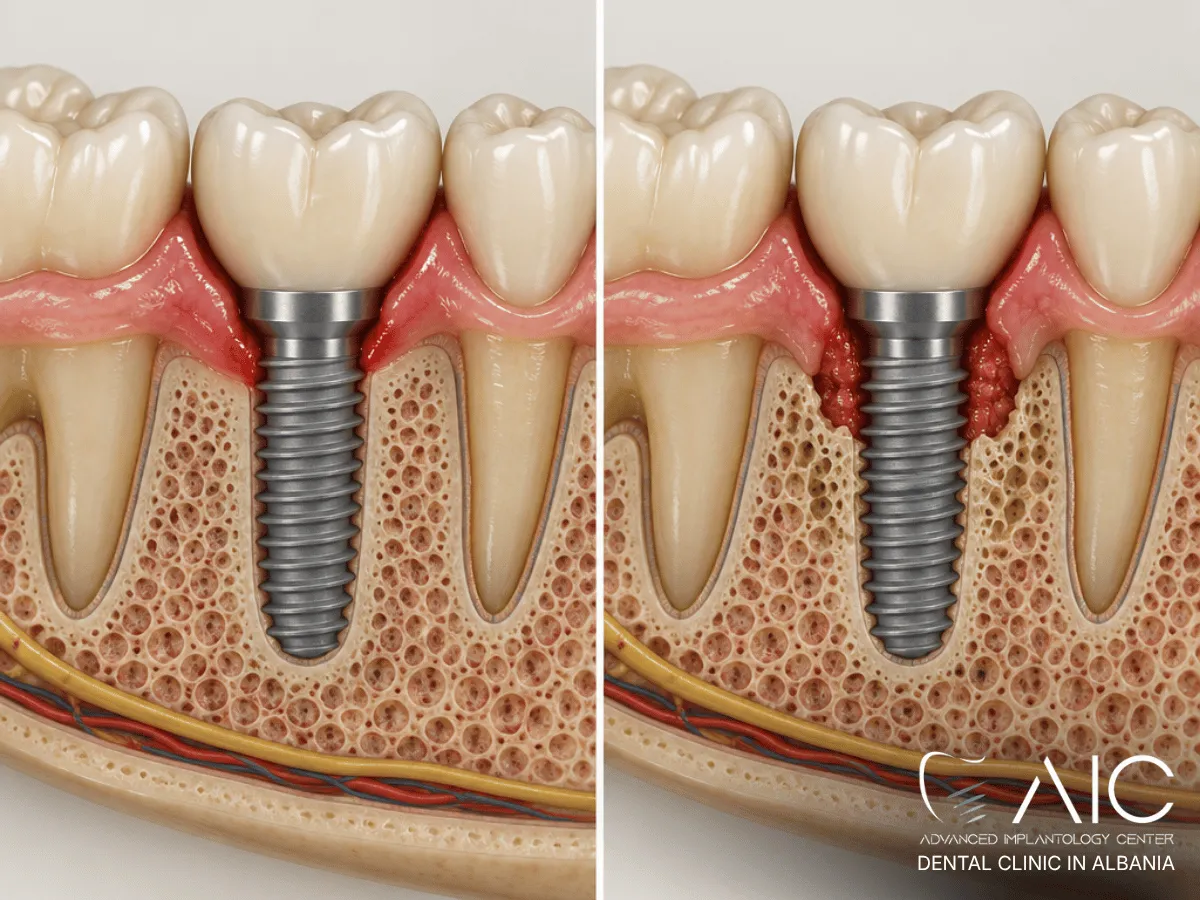
Quick Answer: What Are the Signs of a Dental Implant Infection?
Possible dental implant infection symptoms include:
- red or swollen gum around the implant;
- bleeding around the implant;
- pus or discharge;
- persistent bad taste or unpleasant odor;
- pain or tenderness that is worsening;
- pain when chewing;
- increasing swelling;
- gum recession around the implant;
- visible implant threads that were not previously exposed;
- progressive bone loss on dental imaging;
- and, in advanced cases, implant mobility.
An implant does not need to be painful for peri-implant disease to be present.
This is one reason routine professional monitoring is important even when an implant feels normal.
What Does an Infected Dental Implant Look Like?
An infected or inflamed implant site may have gums that appear:
- redder than surrounding tissue;
- puffy or swollen;
- shiny or inflamed;
- prone to bleeding during brushing or examination;
- receded away from the implant restoration;
- or associated with drainage.
However, visual appearance alone cannot determine whether supporting bone has been lost.
A dentist may need periodontal measurements and dental imaging to distinguish superficial peri-implant mucositis from more advanced peri-implantitis.
Dental Implant Infection vs Normal Healing
Some symptoms overlap with normal postoperative healing, especially during the first few days after implant placement.
| More consistent with normal healing | More concerning for infection or another complication |
|---|---|
| Tenderness beginning immediately after surgery | Pain becoming worse after initially improving |
| Mild swelling during the first few days | New or increasing swelling later in recovery |
| Minor postoperative bleeding | Persistent bleeding or pus around the implant |
| Symptoms gradually improving | Symptoms progressively worsening |
| Implant remains stable | Implant feels mobile |
| No persistent bad taste or drainage | Pus, discharge or persistent unpleasant taste |
The direction of the symptoms is often particularly informative.
Normal surgical discomfort should generally improve as healing progresses. Increasing pain, swelling or drainage after initial improvement requires professional assessment.
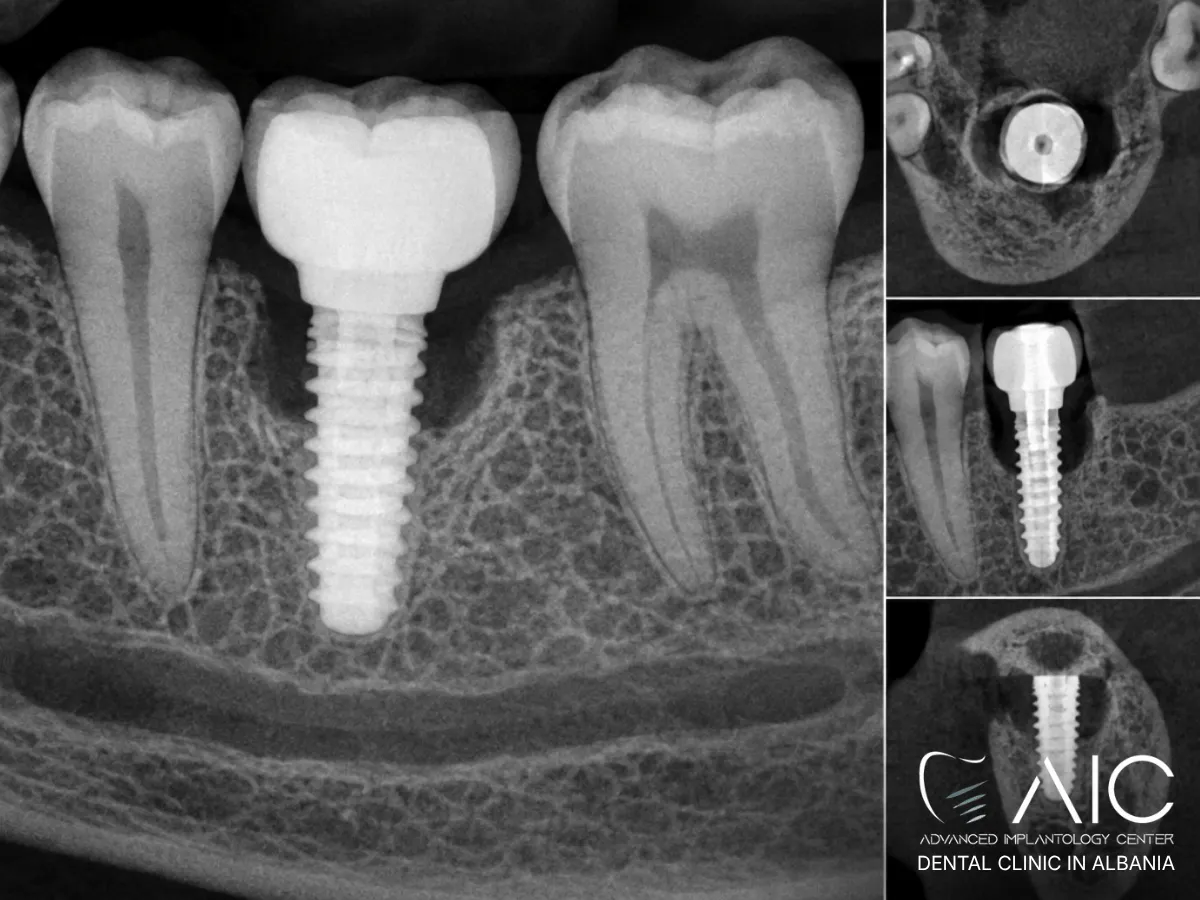
Can a Dental Implant Become Infected Immediately After Surgery?
Yes. An early dental implant infection can develop during the postoperative healing period.
This may occur before complete osseointegration has taken place.
Possible signs include:
- increasing pain;
- new or worsening swelling;
- purulent drainage;
- persistent redness;
- wound breakdown;
- bad taste;
- fever or feeling unwell;
- or failure of the surgical area to heal as expected.
Early postoperative infection is important because osseointegration is still developing during this stage.
Research has shown that acute postoperative infection can increase the risk of early implant failure, although not every infected implant is necessarily lost.
See the published research on dental implant survival after postoperative infection.
Can a Dental Implant Become Infected Years Later?
Yes.
An implant that healed successfully can develop inflammatory disease months or years later.
Late implant infection is usually related to the tissues surrounding the functioning implant rather than the original surgical wound.
Dental plaque and microbial biofilm can accumulate around implants just as they accumulate around natural teeth.
If inflammation remains limited to the soft tissue, the condition is described as peri-implant mucositis.
When inflammation is associated with progressive loss of the supporting bone, it is called peri-implantitis.
Peri-Implant Mucositis vs Peri-Implantitis
| Peri-implant mucositis | Peri-implantitis |
|---|---|
| Inflammation primarily affects the soft tissues. | Inflammation affects the peri-implant tissues and supporting bone. |
| No progressive peri-implant bone loss attributable to the disease. | Progressive supporting bone loss is present. |
| Bleeding and inflammation may occur. | Bleeding, suppuration and deeper peri-implant pockets may occur. |
| Often manageable when detected early. | Usually requires more extensive professional treatment. |
| Can precede peri-implantitis. | Can threaten long-term implant stability if disease progresses. |
The American Academy of Periodontology notes that peri-implant mucositis may be reversible when detected and treated early.
This makes early diagnosis especially important.
What Causes a Dental Implant Infection?
Dental implant infections are usually not caused by one single factor.
A microbial biofilm around the implant plays an important role, but patient-related and treatment-related factors can influence how susceptible the tissues are to disease.
The 2025 joint consensus from the Academy of Osseointegration and American Academy of Periodontology identifies important systemic, behavioral and local risk factors associated with peri-implant disease.
These include:
- poor plaque control;
- a previous history of periodontitis;
- smoking;
- uncontrolled diabetes;
- certain implant-positioning factors;
- prosthetic designs that make cleaning difficult;
- unfavorable peri-implant soft-tissue conditions;
- and inadequate long-term professional maintenance.
You can review the 2025 AO/AAP consensus report on peri-implant diseases.
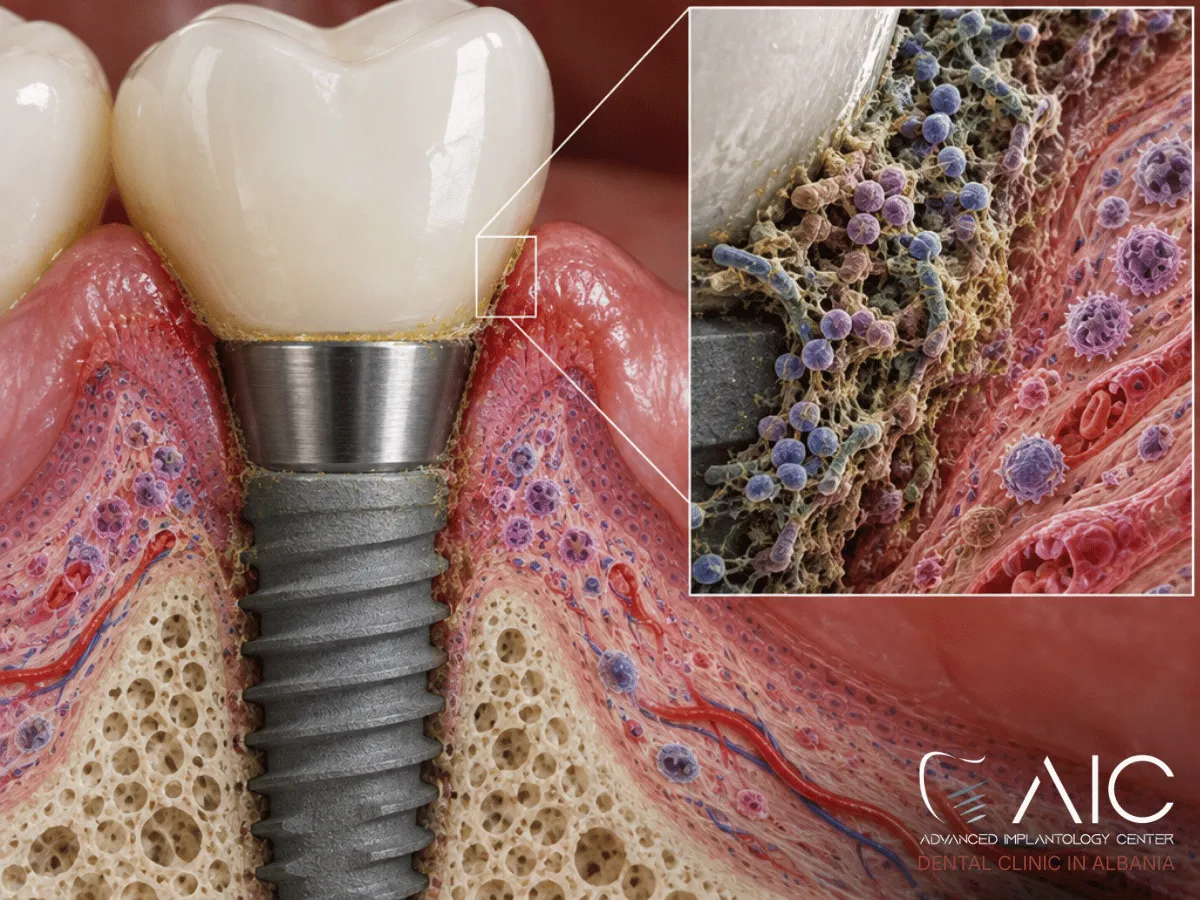
Poor Oral Hygiene and Dental Implant Infection
Dental implants cannot develop cavities, but they still require daily cleaning.
Bacterial plaque can accumulate at the junction between the implant restoration and the gum.
If the biofilm is not adequately disrupted, inflammation can develop in the surrounding peri-implant tissues.
Daily home care should therefore be adapted to the implant restoration.
Depending on the design, this may involve:
- toothbrushing;
- interdental brushes;
- floss or implant-specific cleaning aids;
- and cleaning beneath implant-supported bridges when required.
The best technique depends on your specific implant and prosthetic design.
Previous Gum Disease and Implant Infection Risk
A history of periodontitis is an important risk indicator for peri-implant disease.
Periodontitis causes inflammation and destruction of tissues supporting natural teeth. Patients who have previously experienced this disease require careful periodontal stabilization and long-term monitoring around both teeth and implants.
At AIC Dental, patients with gum inflammation or supporting tissue problems can be evaluated through our periodontics service.
Can Smoking Cause Dental Implant Infection?
Smoking is recognized as an important risk factor in peri-implant health.
Smoking can affect healing, the oral environment and the body’s response to microbial challenge.
The 2025 AO/AAP consensus identifies smoking among the important behavioral factors associated with peri-implant disease.
Patients who smoke should tell their implantologist openly so that the risk can be considered during planning and long-term maintenance.
Diabetes and Dental Implant Infection
Diabetes does not automatically prevent a patient from receiving dental implants.
However, poorly controlled diabetes can influence healing and susceptibility to inflammatory disease.
The latest AO/AAP consensus identifies uncontrolled diabetes as a relevant systemic risk factor for peri-implant diseases.
Good medical management and coordinated dental care are therefore particularly important for patients with diabetes who have dental implants.
Can Cement Around an Implant Crown Cause Inflammation?
Excess restorative cement left below the gum around a cement-retained implant crown can contribute to local inflammation in susceptible sites.
This is one reason implant-restoration design, placement and accessibility for cleaning matter for long-term tissue health.
If inflammation is localized around one implant restoration, the dentist may investigate whether the crown, abutment, prosthetic contour or retained material is contributing to the problem.
Can a Poorly Positioned Implant Develop Infection?
Implant position can influence the health of the surrounding tissues and the ability to maintain them.
An implant that is positioned unfavorably may contribute to:
- difficult cleaning;
- unfavorable prosthetic contours;
- thin or compromised peri-implant tissues;
- or other site-related problems.
The 2025 AO/AAP systematic review and consensus specifically recognize implant position and prosthetic factors among site-level considerations associated with peri-implant disease.
This is one reason modern implant therapy should begin with prosthetically driven planning rather than simply placing an implant wherever bone appears available.
Does Bone Grafting Increase the Risk of Implant Infection?
Bone grafting is routinely used when insufficient bone is available for ideal implant placement.
It does not mean an infection will occur.
However, bone augmentation makes treatment more surgically complex and creates an additional healing area that must be monitored carefully.
Learn more about bone grafting for dental implants and why adequate bone architecture matters for implant placement.
Does Dental Implant Infection Always Cause Pain?
No.
This is an important misconception.
Inflammatory disease around an implant may develop without severe pain, particularly during earlier stages.
Possible signs may instead include:
- bleeding when brushing;
- redness;
- swelling;
- increased probing depth detected by the dentist;
- or progressive changes visible on radiographs.
Pain is therefore not required for peri-implantitis to be present.
Conversely, pain around an implant does not automatically prove that infection is present. Bite-related problems, nerve irritation, adjacent teeth and prosthetic complications can also cause discomfort.
Pus Around a Dental Implant: What Does It Mean?
Pus or purulent discharge around an implant is not considered normal healing.
It indicates an inflammatory or infectious process that should be assessed professionally.
A dentist may evaluate:
- where the discharge is coming from;
- the depth of the peri-implant pocket;
- bleeding around the implant;
- implant stability;
- bone levels;
- the crown or bridge;
- and adjacent teeth.
Do not repeatedly squeeze or probe the area yourself.
Swollen Gum Around a Dental Implant
Swelling during the first few days following implant surgery may be part of normal healing.
Swelling around a previously healed implant is different.
Possible causes include:
- peri-implant mucositis;
- peri-implantitis;
- local plaque accumulation;
- food trapping;
- a prosthetic problem;
- or another dental or periodontal condition.
Persistent or recurrent swelling should be examined rather than treated only with home remedies.
Bleeding Around a Dental Implant
Healthy peri-implant tissues should not routinely bleed during gentle cleaning or professional probing.
Repeated bleeding can indicate inflammation.
Bleeding alone does not determine whether bone loss has occurred, but it is a reason to assess the implant and improve biofilm control.
Bad Taste or Smell Around a Dental Implant
A persistent unpleasant taste or odor can occur when plaque, food debris, drainage or inflammation develops around an implant restoration.
It may be especially important when associated with:
- pus;
- swelling;
- bleeding;
- pain;
- or gum recession.
A dental examination can determine whether the issue comes from the implant, the prosthesis, adjacent teeth or another oral condition.
Can Dental Implant Infection Cause Bone Loss?
Yes.
This is one of the defining features of peri-implantitis.
In peri-implantitis, inflammatory disease is associated with progressive loss of supporting bone around the implant.
As bone loss advances, less bone remains in contact with the implant.
In severe untreated cases, this can threaten implant stability and long-term survival.
How Is a Dental Implant Infection Diagnosed?
A proper diagnosis requires more than looking at the gum.
An implant dentist or periodontist may assess:
- redness and swelling;
- bleeding on gentle probing;
- suppuration or pus;
- peri-implant probing depths;
- gum recession;
- plaque accumulation;
- implant mobility;
- bite forces;
- implant crown or bridge design;
- and radiographic bone levels.
Previous radiographs can be particularly valuable because they allow the dentist to compare current bone levels with earlier measurements.
Three-dimensional imaging may be useful in selected complex cases, although it is not automatically required for every inflamed implant.
Can an Infected Dental Implant Be Saved?
Often, yes—but not always.
The prognosis depends on factors such as:
- whether disease is limited to the soft tissue;
- the amount and pattern of bone loss;
- implant position;
- implant stability;
- access for cleaning;
- the surface area affected;
- the patient’s risk factors;
- and response to treatment.
The European Federation of Periodontology recommends attempting appropriate therapy to retain an individually acceptable implant/prosthesis as the first-line approach in peri-implantitis rather than automatically removing every affected implant.
However, some severely compromised implants may ultimately require removal.
How Is Dental Implant Infection Treated?
Treatment depends on the diagnosis and severity.
There is no single treatment that is appropriate for every infected implant.
The European Federation of Periodontology clinical guideline recommends a structured, stepwise approach to peri-implant disease.
1. Improve Plaque and Biofilm Control
The first objective is to reduce the microbial biofilm that sustains inflammation.
The dental team may:
- professionally clean the implant;
- remove accessible deposits;
- teach more effective home cleaning techniques;
- modify hygiene tools;
- and address prosthetic areas that are difficult to clean.
2. Control Patient Risk Factors
Management may also involve addressing modifiable factors such as:
- smoking;
- poor plaque control;
- unstable periodontal disease;
- and poorly controlled diabetes.
3. Non-Surgical Peri-Implant Treatment
Peri-implant mucositis and initial peri-implantitis management commonly involve professional mechanical biofilm disruption and debridement.
According to the 2025 AO/AAP consensus, peri-implant mucositis can often be effectively managed with non-surgical debridement together with control of relevant risk factors.
4. Re-Evaluation
After initial treatment, the implant should be reassessed.
The dentist evaluates whether:
- inflammation has decreased;
- bleeding has improved;
- suppuration remains;
- deep pockets persist;
- and the site can be maintained effectively.
5. Surgical Treatment When Required
More advanced peri-implantitis may require surgical access.
Depending on the defect and implant anatomy, treatment may involve:
- surgical access for debridement;
- implant surface decontamination;
- resective treatment;
- regenerative or reconstructive treatment in selected defects;
- or soft-tissue procedures.
The 2025 AO/AAP consensus emphasizes that advanced cases require individualized surgical treatment rather than one universal technique.
Do Antibiotics Treat a Dental Implant Infection?
Antibiotics are not a substitute for diagnosing and treating the cause of peri-implant disease.
Peri-implant infection involves microbial biofilm attached to implant and prosthetic surfaces. Mechanical disruption, local debridement and risk-factor control are therefore fundamental components of treatment.
The EFP S3 clinical practice guideline specifically states that routine systemic antibiotics are not recommended as an adjunct to non-surgical peri-implantitis treatment.
Antibiotics may be considered in selected clinical situations based on the diagnosis, extent of infection, surgical treatment and the patient’s general condition, but that decision belongs to the treating clinician.
Do not take leftover antibiotics or antibiotics prescribed to another person for an implant problem.
Can Salt Water Cure a Dental Implant Infection?
No.
A gentle rinse may sometimes form part of postoperative instructions, but home rinses cannot remove established peri-implantitis or regenerate bone that has been lost.
If the implant is infected or has peri-implantitis, professional diagnosis and treatment are required.
Can Mouthwash Cure an Infected Dental Implant?
Mouthwash alone cannot cure established peri-implantitis.
Certain antiseptic products may sometimes be recommended as part of professional treatment, but they do not replace mechanical biofilm control, professional debridement or surgical therapy when those procedures are needed.
Does an Infected Implant Have to Be Removed?
No. Infection does not automatically mean implant removal.
Many cases can be treated, particularly when diagnosed before extensive structural damage has occurred.
Removal becomes more likely when factors such as the following are present:
- advanced circumferential bone loss;
- implant mobility;
- unfavorable implant position;
- persistent disease despite appropriate therapy;
- fracture or major structural problems;
- or a poor long-term prognosis.
The objective is to preserve a functional implant when this can be achieved predictably and safely, not to preserve an implant at any cost.
Can Bone Grow Back Around an Infected Dental Implant?
Regeneration may be possible in carefully selected peri-implant bone defects, but it is not guaranteed.
The potential for reconstructive treatment depends heavily on:
- the shape of the bone defect;
- implant surface and position;
- ability to decontaminate the implant surface;
- soft-tissue conditions;
- smoking and systemic risks;
- and the patient’s ability to maintain excellent plaque control.
Advanced regenerative treatment should therefore be selected based on the actual defect rather than offered automatically to every patient with peri-implantitis.
What Happens if an Infected Implant Is Left Untreated?
Untreated peri-implant inflammation can progress.
Potential consequences include:
- increasing inflammation;
- progressive supporting bone loss;
- gum recession;
- exposure of implant surfaces;
- difficulty cleaning the implant;
- implant mobility;
- and eventual implant loss.
Early diagnosis generally gives the dental team more treatment options.
How Quickly Can Peri-Implantitis Progress?
Progression is not identical in every patient.
Some sites remain relatively stable for periods of time, while disease can progress more aggressively in susceptible patients.
Because symptoms alone do not reliably indicate the amount of bone loss, routine clinical monitoring and radiographic comparison are important.
How Can Dental Implant Infection Be Prevented?
Long-term prevention begins before the implant is placed.
Current EFP and AO/AAP guidance emphasizes controlling disease and risk factors throughout implant treatment and continuing supportive care after the final restoration has been fitted.
Important measures include:
- treating active periodontal disease before implant treatment;
- placing implants in a prosthetically appropriate position;
- designing restorations that can be cleaned;
- maintaining excellent daily plaque control;
- avoiding smoking;
- managing diabetes appropriately;
- attending professional maintenance visits;
- and treating peri-implant mucositis before it progresses.
The EFP S3 guideline strongly recommends regular supportive peri-implant care because ongoing maintenance reduces the risk of developing peri-implant disease.
How Do You Clean Around Dental Implants?
Cleaning should be individualized according to whether you have a single implant crown, implant bridge or full-arch restoration.
Options can include:
- a manual or electric toothbrush;
- interdental brushes of appropriate size;
- specialized floss;
- cleaning beneath bridges;
- and other implant-safe hygiene devices recommended by your dental professional.
The most important factor is consistently removing plaque from the implant-gum interface without damaging the surrounding tissues.
When Should You Contact a Dentist?
Arrange a dental assessment if you notice:
- persistent bleeding around an implant;
- new or increasing swelling;
- pus or drainage;
- pain that is becoming worse;
- persistent bad taste or smell;
- gum recession around the implant;
- difficulty cleaning around the restoration;
- new pain when chewing;
- or any change in the way the implant feels.
When Is an Implant Infection Urgent?
Seek urgent dental or medical assessment if symptoms include:
- rapidly increasing facial swelling;
- difficulty swallowing;
- difficulty breathing;
- significant spreading infection;
- high fever or severe systemic illness;
- uncontrolled bleeding;
- or rapidly worsening symptoms.
Breathing or swallowing difficulties can represent a medical emergency and should not wait for a routine dental appointment.
Frequently Asked Questions About Dental Implant Infection
How do I know if my dental implant is infected?
Possible signs include persistent redness, swelling, bleeding, pus, worsening pain, bad taste or odor, gum recession and changes around the implant. Peri-implantitis can also occur without significant pain, so a professional examination may be needed to determine whether bone loss is present.
Can a dental implant infection go away on its own?
Established peri-implant disease should not be expected to resolve permanently without addressing the cause. Professional plaque removal, improved home care, risk-factor control and sometimes surgical treatment may be required.
Is pus around a dental implant normal?
No. Purulent discharge is not considered normal healing and should be assessed by a dentist.
Can an implant infection occur years after surgery?
Yes. Peri-implant mucositis and peri-implantitis can develop around previously integrated implants months or years after treatment.
Can an infected dental implant be saved?
Many affected implants can be treated. The prognosis depends on the amount of bone loss, implant stability and position, severity of inflammation, patient risk factors and response to treatment.
Will antibiotics cure an infected implant?
Not necessarily. Antibiotics do not replace mechanical removal of microbial biofilm and treatment of the underlying peri-implant problem. Routine systemic antibiotics are not recommended as an adjunct to nonsurgical peri-implantitis therapy.
What is the difference between peri-implantitis and implant infection?
“Implant infection” is a broad patient-friendly term. Peri-implantitis is a specific inflammatory disease affecting tissues around an implant and involving progressive loss of supporting bone.
Is peri-implant mucositis reversible?
Peri-implant mucositis can often be successfully treated when inflammation is identified early and plaque control is restored before progressive supporting bone loss develops.
Does implant movement mean infection?
Not always, but movement of the actual implant fixture is a serious finding and can indicate loss of osseointegration or advanced supporting bone loss. It requires prompt professional evaluation.
Can an implant infection cause facial swelling?
Yes, a significant local infection can cause swelling. Rapidly increasing facial swelling, fever, difficulty swallowing or difficulty breathing requires urgent assessment.
Can peri-implantitis cause bone loss?
Yes. Progressive supporting bone loss is one of the defining characteristics of peri-implantitis.
How often should dental implants be checked?
There is no single maintenance interval appropriate for every patient. Follow-up should be individualized according to periodontal history, plaque control, smoking, diabetes, prosthetic design and previous peri-implant disease. Regular professional peri-implant maintenance is strongly recommended.
Dental Implant Infection: The Bottom Line
A dental implant infection does not automatically mean that the implant will fail.
The most important factor is early diagnosis and appropriate treatment.
Inflammation limited to the gum around an implant may represent peri-implant mucositis and can often be controlled when identified early.
When inflammation progresses into supporting bone, the condition becomes peri-implantitis and treatment becomes more complex.
Watch for signs such as persistent bleeding, swelling, pus, worsening pain, gum recession, bad taste or changes around an implant—but remember that peri-implant disease can also develop without significant pain.
At SOTA Dental – Advanced Implantology Center, patients with implant complications can be evaluated through clinical examination, periodontal assessment and diagnostic imaging when indicated.
Our periodontics team evaluates inflammatory conditions affecting the tissues around teeth and implants, while complex implant cases can be reviewed as part of our advanced implantology service.
For complex implant and surgical assessment, learn more about Dr. Klevis Sota, Oral Surgeon and Implantologist.
Medical disclaimer: This information is for educational purposes and is not a substitute for a clinical diagnosis. Dental implant complications should be assessed by an appropriately qualified dental professional.