
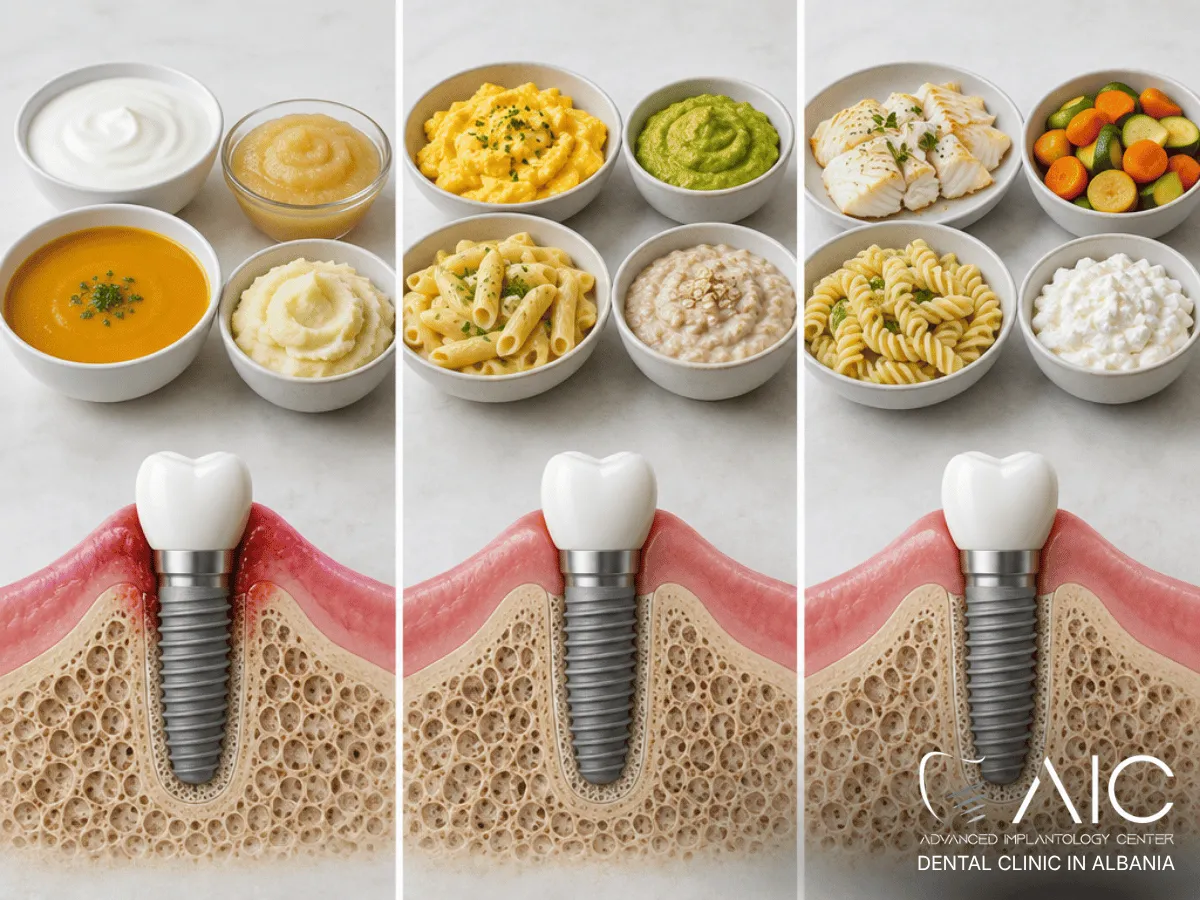
After dental implant surgery, the safest foods are generally soft, easy to chew and unlikely to disturb the surgical site. Examples include yogurt, scrambled eggs, mashed potatoes, soft pasta, applesauce, smooth soups and other foods that can be eaten without forceful chewing. During the first days after surgery, your goal is not simply to avoid pain. You also want to avoid unnecessary mechanical pressure on the implant site while your gum and jawbone begin healing.
Hard, crunchy, sticky and sharp foods should generally be avoided during early recovery. You should also avoid chewing directly over the implant until your dental team tells you the area can tolerate more pressure. How quickly you can return to your usual diet depends on the procedure.
A straightforward single implant may recover differently from:
- multiple dental implants;
- an implant placed immediately after an extraction;
- bone grafting;
- a sinus lift;
- All-on-4 or All-on-6 treatment;
- or another full-mouth implant procedure.
This guide explains what to eat after dental implant surgery, which foods to avoid, how to progress your diet and when you may be able to return to normal eating. If you are still researching implant treatment, see our complete guide to dental implants and advanced implantology.
Important: Your surgeon’s postoperative instructions take priority over general advice. Surgical technique, implant stability, grafting and your medical history can all change what is appropriate during recovery.
Quick Answer: What Can You Eat After Dental Implant Surgery?
Good choices during early recovery usually include:
- Greek yogurt or regular yogurt;
- scrambled or softly cooked eggs;
- mashed potatoes;
- smooth vegetable purées;
- applesauce;
- mashed banana;
- soft pasta;
- cottage cheese;
- soft oatmeal once it has cooled appropriately;
- smooth soups and broths;
- well-cooked soft vegetables;
- soft fish when you are ready for more chewing;
- and other foods that require minimal chewing.
The University of Illinois Chicago College of Dentistry advises implant patients to eat soft foods and avoid chewing on the implant site, as well as avoiding hard, crunchy and sticky foods. You can review its oral surgery postoperative guidance.
Why Does Your Diet Matter After Implant Surgery?
Dental implant surgery creates a controlled surgical site within the gum and jawbone.
During the early healing period, several processes are occurring simultaneously:
- the surgical wound is closing;
- soft tissues are recovering;
- inflammation is gradually resolving;
- and the surrounding bone begins the process that ultimately leads to osseointegration.
Osseointegration is the biological process through which living bone establishes stable contact with the dental implant surface. Eating does not need to stop during this process, but excessive chewing force directly over a newly operated area is generally avoided. The University of Michigan’s postoperative implant guidance similarly advises patients to eat soft foods, avoid hard or crunchy foods and avoid chewing over the surgical site.
What to Eat on the Day of Dental Implant Surgery
The day of surgery is usually the most restrictive part of the diet. Your mouth may remain numb for several hours after local anesthesia. This creates a risk of accidentally biting your tongue, lip or cheek. Very hot foods or drinks should also be avoided while sensation is reduced because you may not accurately judge temperature.
Good options once your dental team has told you that eating is appropriate may include:
- yogurt;
- applesauce;
- smooth mashed potato;
- pudding;
- soft scrambled eggs;
- lukewarm or cool smooth soup;
- mashed banana;
- smooth cottage cheese;
- and other soft foods requiring almost no chewing.
The University of Rochester’s postoperative implant guidance recommends liquids initially, followed by soft foods, and advises avoiding excessively hot food and drink during the first 24 hours.
What to Eat During the First 24 Hours
During approximately the first day, prioritize foods that are:
- soft;
- smooth;
- easy to swallow;
- nutritious;
- not excessively hot;
- and unlikely to leave sharp particles around the wound.
You should also maintain adequate fluid intake unless your medical team has given you different instructions.
Examples include:
| Food | Why it can work during early recovery |
|---|---|
| Yogurt | Soft and requires almost no chewing. |
| Scrambled eggs | Soft while also providing protein. |
| Mashed potatoes | Smooth and easy to eat when not served too hot. |
| Applesauce | Soft and requires no significant chewing. |
| Mashed banana | Soft texture and easy to swallow. |
| Smooth soup | Easy to eat when allowed to cool to a safe temperature. |
| Cottage cheese | Soft texture with little chewing required. |
| Pudding or custard | Smooth and comfortable during the immediate recovery period. |
What to Eat 2 to 3 Days After Dental Implant Surgery
Swelling and tenderness can still be noticeable during the first few days.
If your recovery is progressing normally, you can often begin adding a little more variety while still keeping foods soft.
Possible options include:
- soft eggs;
- mashed vegetables;
- well-cooked pasta;
- soft oatmeal;
- soft noodles;
- smooth soups;
- soft cheese;
- mashed avocado;
- soft tofu;
- very tender flaky fish;
- and well-cooked vegetables mashed or cut into small pieces.
Continue avoiding chewing directly on the surgical site unless specifically instructed otherwise.
What to Eat During the First Week
During the first week, the priority remains protecting the surgical area while gradually improving the nutritional variety of your diet.
You can build meals around soft sources of:
- protein;
- carbohydrates;
- vegetables;
- fruit;
- and adequate fluids.
Examples of more substantial soft meals include:
- scrambled eggs with mashed avocado;
- soft pasta with smooth sauce;
- mashed potato with flaky fish;
- well-cooked vegetables blended into soup;
- soft oatmeal with mashed banana;
- cottage cheese with soft fruit purée;
- soft lentil or vegetable soup;
- and tender foods that can be chewed away from the surgical area.
The important principle is not the calendar alone.
Your food should become more substantial as your comfort and your surgeon’s instructions allow, without placing excessive force on the healing implant.
How Long Should You Eat Soft Foods After Dental Implants?
There is no single number of days that applies to every implant patient.
The University of Rochester’s oral surgery guidance suggests liquids on the day of surgery, soft foods during the first week and then gradual progression according to tolerance, while still avoiding hard and crispy foods during early healing. Other professional postoperative instructions recommend a soft diet during the immediate postoperative period followed by gradual return toward normal foods.
The correct duration depends on:
- number of implants;
- implant stability;
- location of the implant;
- whether the implant is exposed or submerged;
- need for bone grafting;
- sinus surgery;
- extractions;
- immediate loading;
- type of temporary restoration;
- and how your tissues are healing.
Do not assume that because your gum feels better, the implant has completed osseointegration. Bone integration continues much longer than the initial soft-tissue recovery.
When Can You Eat Normally After Dental Implant Surgery?
Return to normal eating should be gradual rather than based on one fixed date. University of Rochester Medicine notes that early recovery takes place during the first weeks, while bone integration continues over several months. Its implant guidance recommends starting with soft foods and gradually returning to normal foods while avoiding direct chewing on the implant during healing.
Some patients may progress toward a broader diet relatively quickly, whereas others need longer dietary restrictions because of grafting or full-arch treatment. Before returning to very hard foods, make sure you understand whether the implant is:
- still healing under the gum;
- supporting a temporary crown;
- immediately loaded;
- or already restored with the final prosthesis.
Foods to Avoid After Dental Implant Surgery
During early healing, foods that can traumatize the surgical area or require excessive chewing are usually avoided.
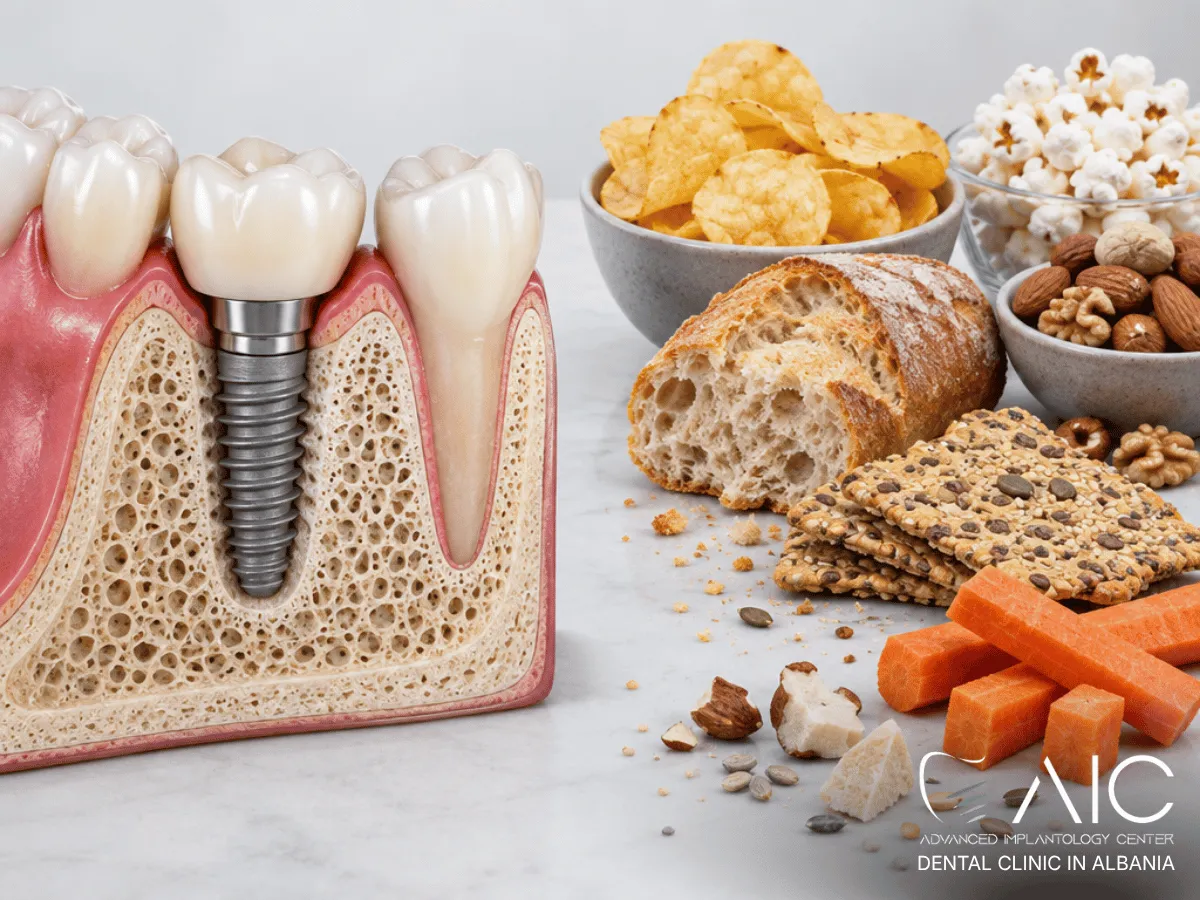
Hard Foods
Examples include:
- hard nuts;
- hard candy;
- hard crusts;
- raw carrots;
- very firm apples;
- and ice.
Crunchy Foods
Examples include:
- potato chips;
- crisps;
- popcorn;
- crackers;
- hard pretzels;
- and crunchy toasted bread.
University of Rochester’s implant aftercare guidance specifically recommends avoiding hard, crispy foods such as chips, hard pretzels and popcorn during early recovery.
Sticky or Very Chewy Foods
Avoid foods that require prolonged forceful chewing, particularly over the surgical site.
Examples can include:
- chewy candy;
- caramel;
- very tough meat;
- and dense chewy bread.
Small Hard Particles
Tiny particles can become trapped near surgical areas. Some postoperative oral-surgery instructions specifically recommend avoiding foods such as rice, nuts and seeds during early healing. The exact restriction depends on the location and type of surgery, so follow your own surgeon’s instructions.
Very Spicy Foods
Strong spices can irritate a fresh surgical wound and may be uncomfortable during early recovery.
Very Hot Foods and Drinks
Very hot foods are particularly inappropriate while your mouth is still numb.
Cambridge University Hospitals advises patients to avoid hot foods and drinks while local anesthetic is still affecting sensation.
Can I Eat Rice After Dental Implant Surgery?
Rice is soft when cooked, but the individual grains are small enough to become trapped around a healing surgical site. University of Illinois Chicago’s oral surgery guidance specifically advises avoiding foods containing rice, nuts or seeds during early postoperative recovery. For this reason, rice may not be the best choice immediately after surgery. Your surgeon can tell you when the wound has healed sufficiently for small-grain foods to be reintroduced.
Can I Eat Bread After Dental Implant Surgery?
It depends on the bread.
Hard crusty bread, toast, baguettes and dense chewy bread can require significant chewing and may irritate the surgical site.
Very soft bread may eventually be easier to tolerate, but it can still become sticky when chewed.
During the first days, smoother soft foods are generally easier and safer.
Can I Eat Eggs After Dental Implant Surgery?
Yes, soft eggs are one of the most practical foods during early implant recovery.
Scrambled eggs require relatively little chewing and provide protein.
Both university oral-surgery and dental-implant postoperative guidance commonly include eggs among recommended soft-food choices.
Can I Eat Yogurt After Dental Implant Surgery?
Yogurt is commonly recommended after oral surgery because it is soft and easy to swallow.
Choose varieties without hard granola, seeds, nuts or other crunchy additions during the early postoperative period.
Can I Eat Pasta After Dental Implant Surgery?
Well-cooked, very soft pasta is commonly included in postoperative food recommendations.
Avoid pasta that is firm or requires substantial chewing, and allow sauces to cool before eating during the immediate postoperative period.
Can I Eat Meat After Dental Implant Surgery?
Tough meat is usually a poor choice during the first days because it requires substantial chewing.
As healing progresses, softer protein options can include:
- flaky fish;
- very tender minced meat;
- soft shredded chicken when appropriate;
- and other proteins that require minimal chewing.
Do not chew these directly over the surgical site unless your dentist says it is safe.
Can I Eat Pizza After Dental Implant Surgery?
Pizza is generally not an ideal early postoperative food.
The crust can be chewy or crunchy, melted cheese can require repeated chewing, and the food may be eaten very hot.
It is better to wait until your surgeon has allowed progression toward firmer foods.
Can I Eat Chips After Dental Implant Surgery?
Chips and crisps should be avoided during early healing.
They are hard, sharp and crunchy and can irritate the wound.
Both university and NHS oral-surgery guidance advise avoiding hard or sharp foods during recovery.
Can I Eat Nuts After Dental Implant Surgery?
Nuts are hard and can produce small fragments that may reach the surgical area.
They should generally be avoided during the early postoperative period.
Can I Eat Seeds After Dental Implant Surgery?
Small seeds can lodge around a fresh wound and may be difficult to remove without disturbing the surgical site.
Avoid seeded bread, granola, berries with numerous small seeds and similar foods if your surgeon has instructed you to keep small particles away from the area.
Can I Drink Coffee After Dental Implant Surgery?
Coffee introduces two separate questions: temperature and caffeine.
The clearest immediate concern is temperature.
Do not drink very hot coffee while your mouth is still numb or when your surgeon has instructed you to avoid hot liquids.
Cambridge University Hospitals advises avoiding hot food and drinks for several hours after oral surgery while local anesthesia remains active.
If you want coffee during recovery, follow your surgeon’s instructions regarding timing and allow it to cool sufficiently.
Can I Drink Through a Straw After Dental Implant Surgery?
Generally, avoid straws during the immediate postoperative period unless your surgeon specifically tells you otherwise.
Suction can disturb a healing surgical site.
University of Illinois Chicago’s implant instructions specifically advise avoiding straws following implant surgery.
Drink directly from a cup instead.
Can I Drink Alcohol After Dental Implant Surgery?
Alcohol is generally avoided during early postoperative healing.
It may also interact with prescribed medications or make postoperative care more difficult.
NHS oral-surgery guidance advises avoiding alcohol while healing and while taking pain medication.
If you have been prescribed antibiotics or other medications, follow the medication instructions provided by your healthcare team.
Should You Drink Plenty of Water After Implant Surgery?
Maintaining hydration is important during recovery unless your doctor has given you a medical reason to restrict fluids.
Drink gently from a cup rather than using a straw during the early healing period.
If eating is difficult because of soreness, fluids and soft nutrient-dense foods can help you maintain your intake while chewing is limited.
Protein-Rich Soft Foods After Dental Implants
When chewing is restricted, it is easy for meals to become mostly desserts or refined carbohydrates.
Try to include appropriate soft protein foods when tolerated.
Options can include:
- eggs;
- Greek yogurt;
- cottage cheese;
- soft fish;
- soft tofu;
- smooth lentil soup;
- and tender minced protein later in recovery.
The objective is to maintain a balanced diet while adapting texture to protect the surgical site.
Can You Have Smoothies After Dental Implant Surgery?
A smooth drink can be convenient when chewing is uncomfortable, but there are two important considerations.
First, do not use a straw during early recovery unless your surgeon has specifically allowed it.
Second, avoid adding small hard seeds, nuts or crunchy ingredients that may lodge around the wound.
Drink directly from a cup or use a spoon.
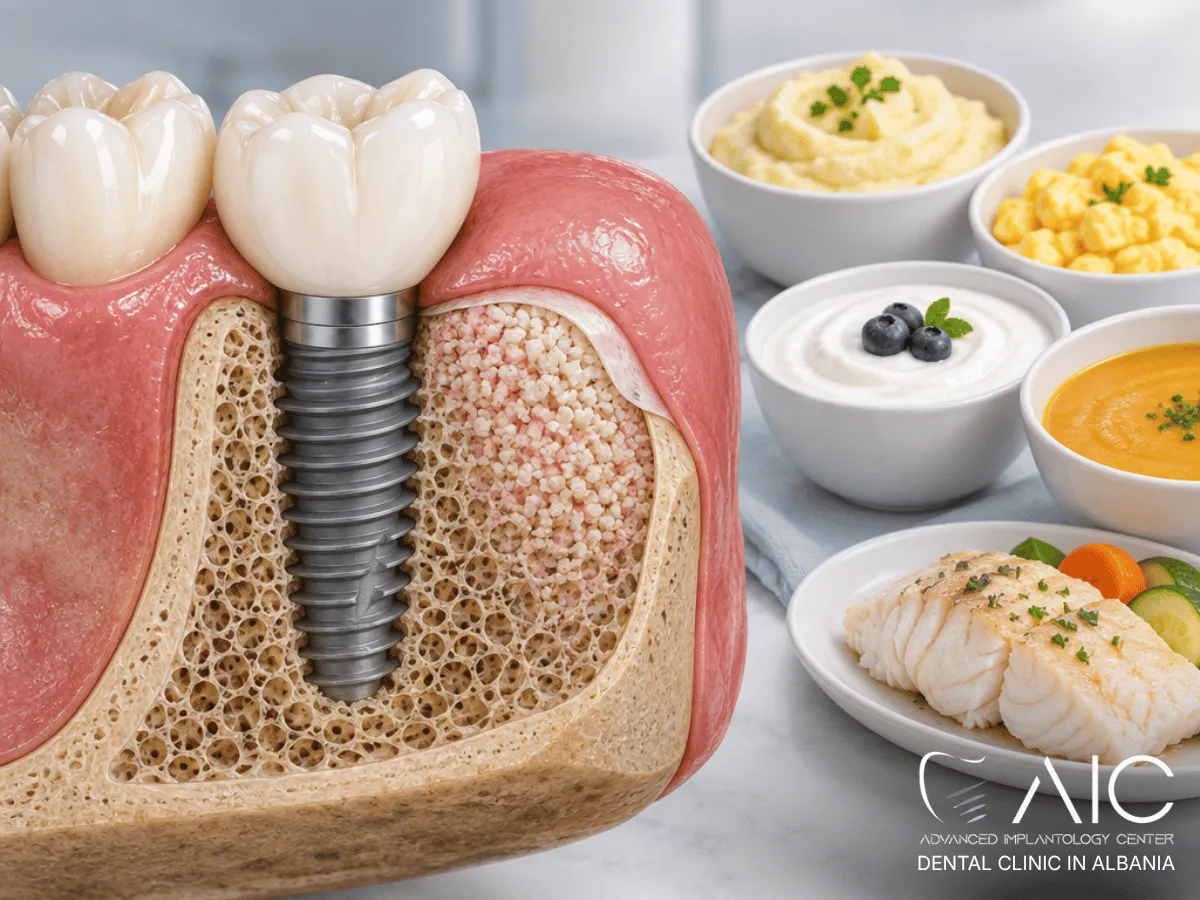
What to Eat After Dental Implant Surgery With a Bone Graft
Bone grafting may require a more cautious recovery because both the implant region and grafted tissues need protection.
Patients undergoing grafting are commonly advised to avoid pressure and trauma to the surgical site.
A soft diet may therefore need to continue longer than after a simple implant procedure.
Follow the exact instructions provided by your surgeon regarding:
- chewing location;
- food texture;
- oral rinsing;
- cleaning;
- and progression back toward normal foods.
Learn more about bone grafting for dental implants and how grafted bone is used to rebuild deficient implant sites.
What to Eat After an Implant and Sinus Lift
A sinus lift increases bone height in the posterior upper jaw when insufficient bone is available beneath the maxillary sinus. The dietary principles remain focused on protecting the surgical area and avoiding unnecessary chewing pressure. nHowever, sinus surgery also comes with additional postoperative precautions. For example, University of Rochester guidance instructs sinus-surgery patients to avoid actions that generate strong sucking or blowing pressure. Follow all sinus precautions provided by your surgeon in addition to the dietary instructions. nRead more about sinus lifts for dental implants.
What to Eat After All-on-4 or Full-Arch Implant Surgery
Full-arch implant treatment requires its own dietary strategy. Even when patients receive a fixed temporary bridge quickly after surgery, this does not mean the implants have completed osseointegration. The implants are still biologically healing beneath the restoration. During this period, excessive chewing force may place unnecessary load on the implants or temporary prosthesis.
Your implantologist may therefore prescribe a prolonged soft-food diet.
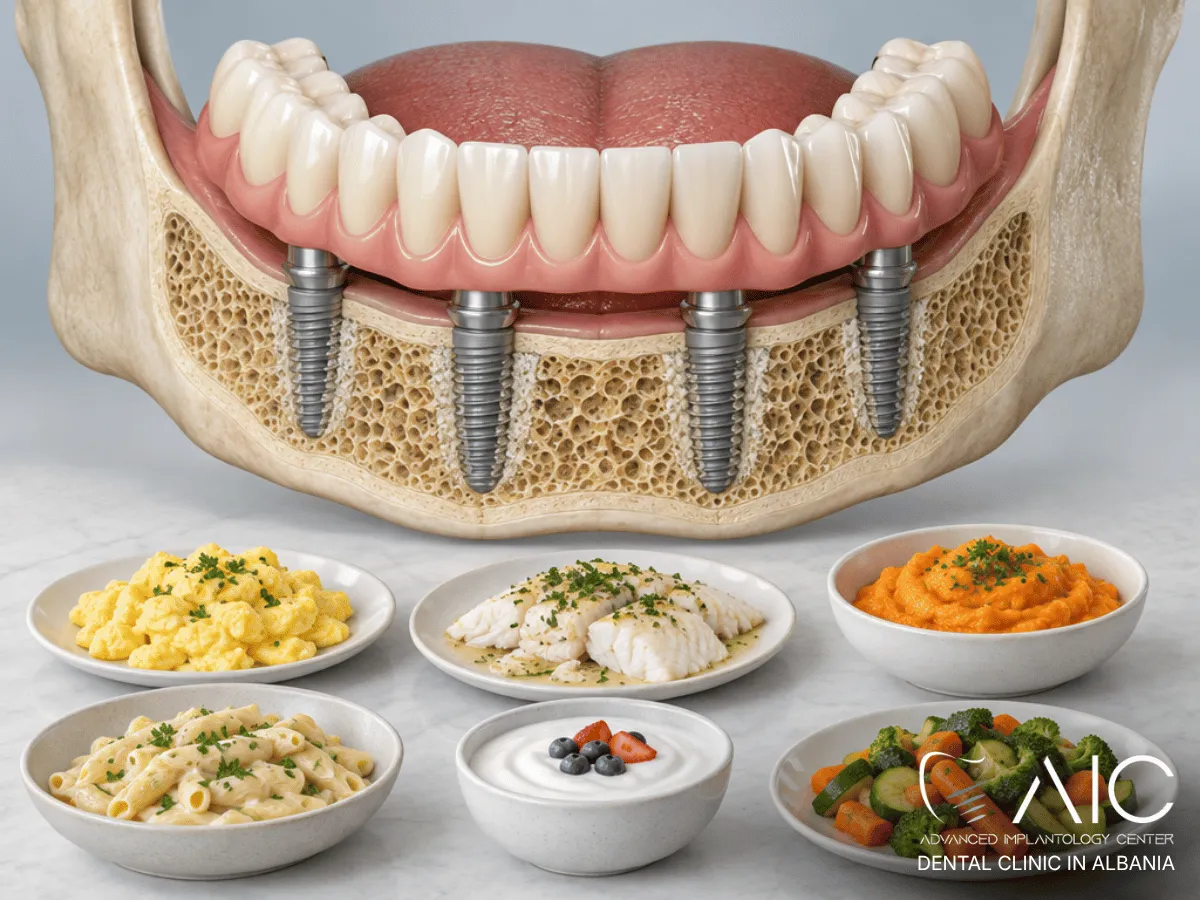
Typical foods may include:
- eggs;
- soft fish;
- mashed vegetables;
- soft pasta;
- soft cooked vegetables;
- yogurt;
- soft cheese;
- smooth soups;
- and foods that can be cut easily with a fork.
The temporary bridge feeling secure does not mean it should immediately be used to chew hard foods.
If you are having full-arch treatment, follow the specific loading protocol provided by your implant surgeon.
Should You Chew on the Opposite Side After a Dental Implant?
For a single implant placed on one side of the mouth, your surgeon may advise chewing primarily on the opposite side during early recovery. This reduces direct mechanical pressure on the operated area. However, this strategy may not be possible after bilateral surgery or full-mouth implant treatment. In those cases, food texture becomes even more important.
What if Food Gets Stuck Around the Implant?
Do not aggressively dig food out of a fresh surgical site with your fingernail, toothpick or other object. Postoperative cleaning instructions vary depending on the procedure. Many oral-surgery protocols advise avoiding vigorous rinsing on the day of surgery and beginning gentle rinsing from the following day. The University of Michigan’s implant guidance recommends keeping the area free of food debris using gentle mouthwash or warm salt-water rinsing beginning after surgery according to the surgeon’s instructions. Always follow the cleaning protocol you were given.
Should You Rinse Your Mouth After Eating?
Not immediately after surgery unless your surgeon has instructed you to do so. Several NHS postoperative protocols advise patients not to rinse vigorously on the day of oral surgery because it may disturb the healing area and encourage bleeding. From the following day, gentle salt-water or prescribed mouth rinses may be recommended. Ashford and St Peter’s Hospitals advises gentle warm salt-water rinsing after meals beginning the day after surgery.
A Simple 3-Day Dental Implant Meal Plan
Day 1
Breakfast or first meal: yogurt and mashed banana.
Lunch: smooth lukewarm potato or vegetable soup.
Snack: applesauce or pudding.
Dinner: smooth mashed potato with softly scrambled eggs.
Day 2
Breakfast: soft scrambled eggs with mashed avocado.
Lunch: blended vegetable or lentil soup.
Snack: Greek yogurt.
Dinner: very soft pasta with a smooth sauce.
Day 3
Breakfast: soft oatmeal with mashed banana.
Lunch: mashed vegetables with soft flaky fish if comfortable.
Snack: cottage cheese or yogurt.
Dinner: well-cooked pasta or soft vegetables with eggs.
This meal plan is an example rather than a prescription. Adjust it for allergies, diabetes, intolerances, cultural diet, medications and the postoperative instructions given by your dental team.
What Should You Eat if You Have Diabetes?
Patients with diabetes should not rely on sugary desserts simply because they are soft. Choose soft foods that remain appropriate for your normal diabetes nutrition plan and follow any medical instructions regarding blood glucose management.
Options can include:
- eggs;
- plain yogurt;
- soft vegetables;
- appropriate soups;
- soft fish;
- and other low-chewing foods compatible with your medical diet.
If diabetes is part of your medical history, see our guide to dental implants and diabetes.
Signs That You Should Contact Your Dentist During Recovery
Your diet should become progressively easier as your surgical discomfort improves.
Contact your implant team if you develop:
- pain that becomes significantly worse rather than better;
- new or increasing swelling after the first few days;
- pus or drainage;
- persistent bad taste;
- fever;
- significant bleeding;
- a temporary restoration that feels loose or broken;
- implant movement;
- difficulty swallowing;
- or difficulty breathing.
Increasing pain or swelling after the early postoperative period can require professional review rather than dietary modification alone.
Frequently Asked Questions About Eating After Dental Implant Surgery
What is the best food to eat after dental implant surgery?
There is no single best food, but soft foods such as yogurt, scrambled eggs, mashed potatoes, applesauce and smooth soups are commonly recommended because they require little chewing.
How long should I eat soft foods after a dental implant?
The duration depends on the procedure. A straightforward implant may require a shorter period of dietary modification than bone grafting or full-arch implant surgery. Follow your surgeon’s instructions and progress food texture gradually.
Can I eat normally 3 days after a dental implant?
Many patients are still better suited to a soft diet at three days. Swelling and tenderness can remain noticeable during this period, and the implant is still at an early stage of healing.
Can I eat normally after one week?
Some patients can begin adding more substantial foods after a week, but this does not necessarily mean hard chewing over the implant is appropriate. Bone integration continues long after the gum begins feeling better.
Can I chew on my dental implant after surgery?
Do not deliberately chew directly on a fresh implant site unless your surgeon has instructed you that doing so is appropriate. Postoperative guidance generally recommends avoiding chewing over the implant during early healing.
Can I drink coffee after implant surgery?
Avoid very hot drinks while your mouth remains numb and follow your surgeon’s temperature restrictions during the initial postoperative period. Coffee can be allowed later depending on your individual instructions.
Can I drink with a straw?
Generally, straws are avoided during early recovery because suction may disturb the healing surgical area. Drink directly from a cup unless your surgeon says otherwise.
Can I eat rice after dental implant surgery?
Rice can be problematic early in healing because individual grains can lodge near the wound. Some oral-surgery postoperative protocols specifically recommend temporarily avoiding rice and other small particles.
Can I eat spicy food after dental implants?
Very spicy food may irritate fresh oral tissues and is better avoided during the immediate postoperative period if it causes discomfort.
Can I eat ice cream after implant surgery?
Soft cold foods may be comfortable for some patients, and some oral-surgery instructions list ice cream among suitable postoperative foods. Avoid varieties containing hard nuts, crunchy pieces or seeds.
When can I eat steak after dental implants?
Steak requires considerable chewing and is not appropriate during early recovery. The correct time to return to tough foods depends on implant healing, restoration type and your surgeon’s instructions.
What can I eat after All-on-4 implant surgery?
Full-arch patients are commonly prescribed a soft diet during implant integration. Eggs, soft pasta, fish, mashed vegetables, yogurt and foods easily cut with a fork are generally more appropriate than hard or chewy foods.
Why can’t I eat hard food if my temporary teeth feel strong?
A temporary implant-supported restoration can feel stable before biological osseointegration is complete. The implants underneath are still healing, so excessive chewing force may be inappropriate despite the restoration feeling secure.
Bottom Line: Protect the Implant While Still Eating Well
The basic rule after implant surgery is simple:
Start soft, avoid unnecessary pressure on the surgical area and gradually increase food texture as healing progresses and your surgeon allows.
During the earliest stage, choose foods such as:
- yogurt;
- eggs;
- mashed potatoes;
- soft pasta;
- smooth soups;
- soft vegetables;
- mashed fruit;
- and other foods requiring minimal chewing.
Avoid hard, crunchy, sticky, sharp and highly chewy foods during early recovery. Small grains, nuts and seeds may also need to be temporarily restricted depending on the wound. Most importantly, do not use how the gum feels as the only indicator that the implant is ready for heavy chewing. Soft-tissue recovery occurs much earlier than complete bone integration. Patients who undergo bone grafting, sinus augmentation, multiple implants or full-arch rehabilitation may need a longer or more restrictive diet.
At SOTA Dental – Advanced Implantology Center, postoperative instructions are adapted to the specific surgical procedure and implant-loading protocol. Learn more about our dental implant treatments or about Dr. Klevis Sota, Oral Surgeon and Implantologist.
Medical disclaimer: This article provides general educational guidance and does not replace postoperative instructions from your own oral surgeon. Your diet may need to be modified based on implant stability, grafting, medical conditions and the type of restoration placed.